
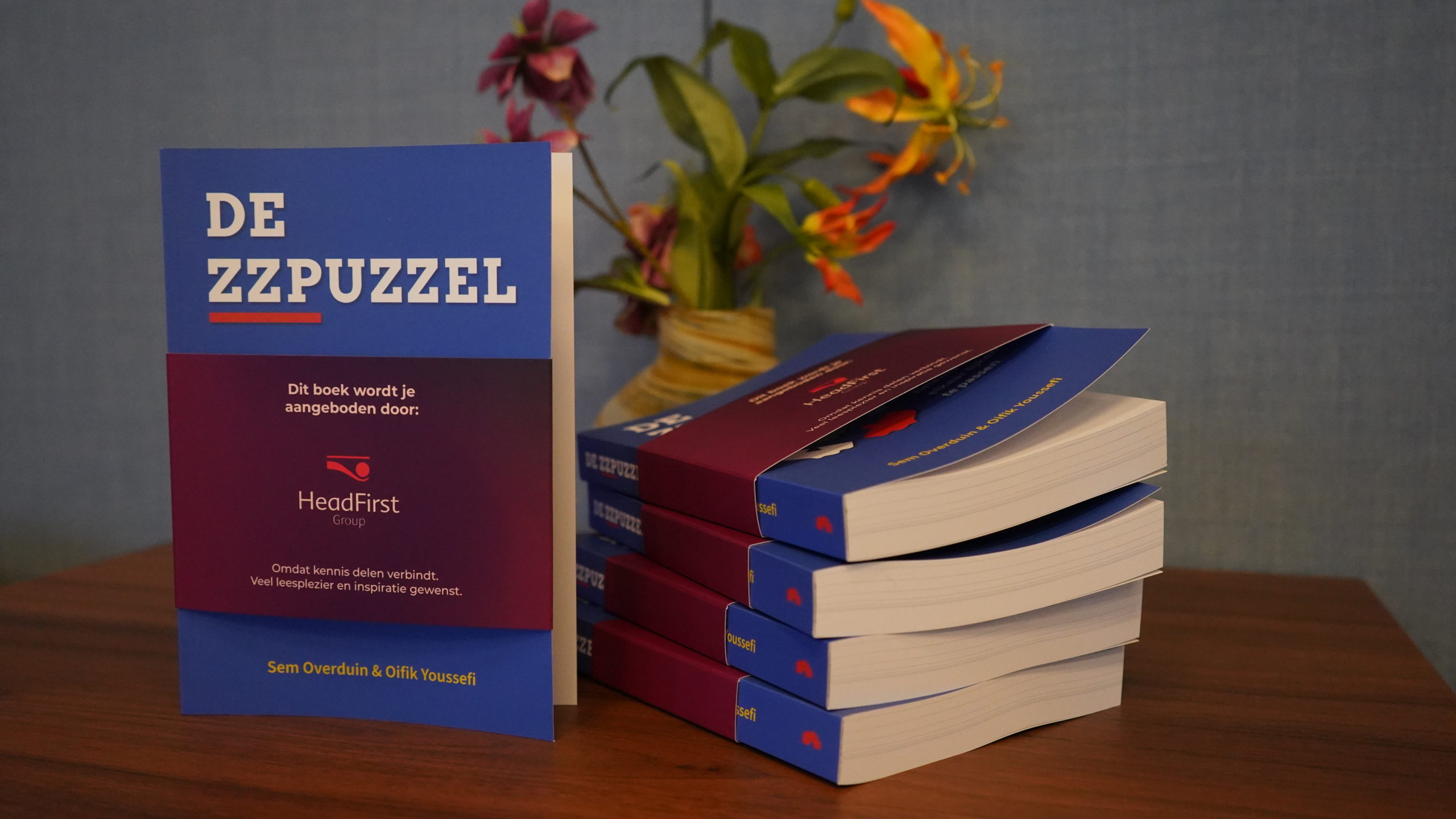
Our Public Affairs colleagues Sem Overduin and Oifik Youssefi co-authored the book *De ZZPuzzel*, a factual analysis of the self-employed issue. The book was the result of numerous discussions with labor market experts from academia, politics, and civil society. Persistent misinformation, one-sided perceptions, a lack of political decisiveness, and the complexity of labor law make this issue a complicated puzzle. In this series of articles, the authors engage in dialogue with stakeholders who contribute an additional piece of the puzzle.
Which puzzle piece would you like to add to The ZZPuzzle?
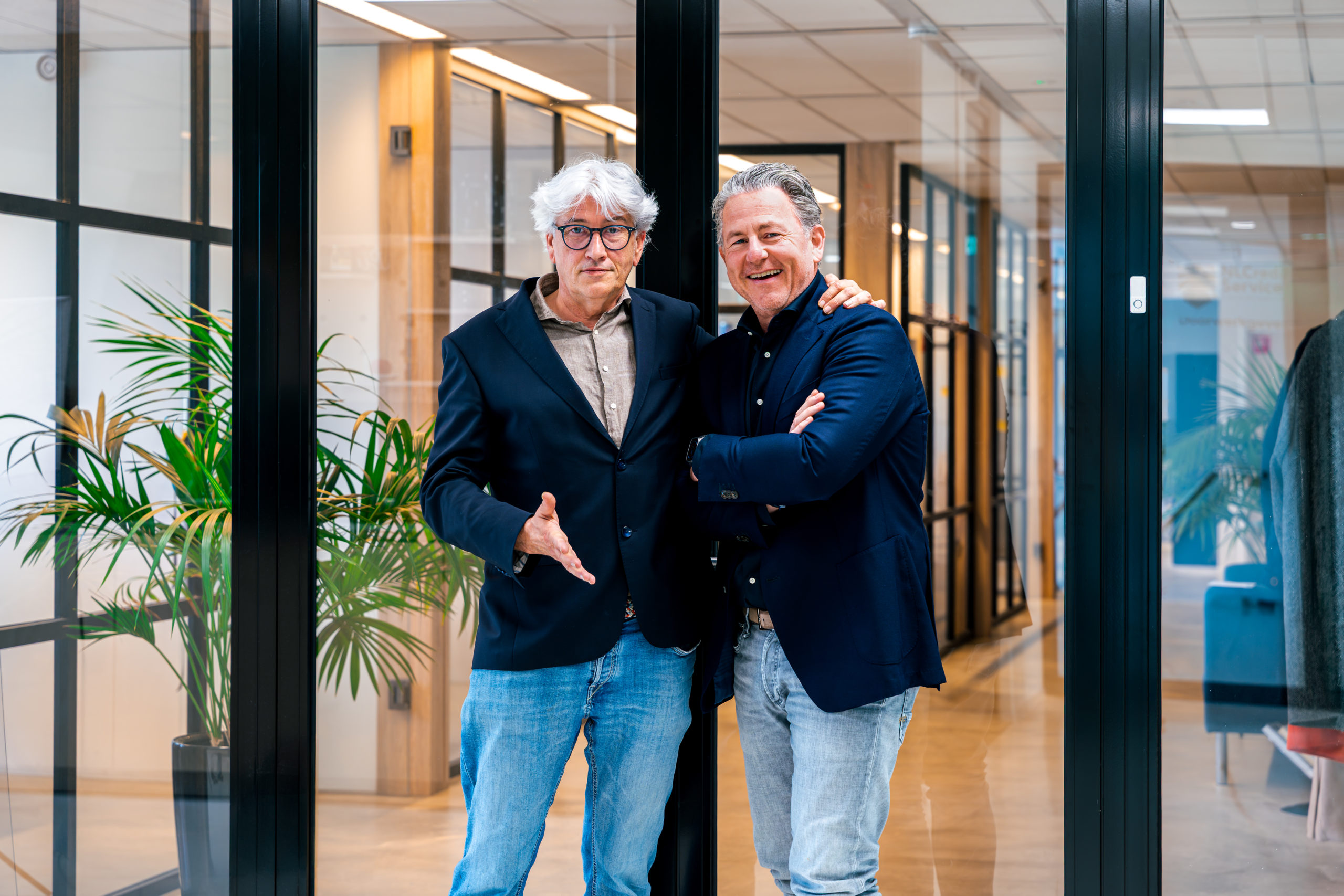
Ron van der Net: “If politicians and society believe that self-employed workers should contribute to social security, then make sure the system is fair and well-organized. A more equitable social security system would go a long way toward resolving the entire issue of eligibility.”
Marc Leene: “Right now, the discussion often gets bogged down in the question: are you an entrepreneur or an employee? Whereas the underlying question should really be how to effectively organize workers within the system. That’s still too often missing.”
In 2020, Statistics Netherlands (CBS) noted that an increasing number of people aged 65 and older are continuing to work after retirement. What do you think this trend indicates?
Marc Leene: “That says a lot. But there are plenty of retirees who want to keep working but don’t know how. There’s a huge pool of labor there that remains untapped.”
Ron van der Net: “There are also older people who work as self-employed professionals after reaching retirement age, but it should be noted that this group was already working as self-employed professionals before they retired. Incidentally, I no longer find the term ‘self-employed’ entirely appropriate. I prefer to refer to them as ‘those who enjoy the fruits of their labor.’ For this group, work is often no longer a primary necessity for survival, but rather something that provides fulfillment, rhythm, and meaning.”
In your opinion, what is the main reason why many retirees ultimately decide not to continue working?
Marc Leene: “Legislation and regulations, and entrenched ways of thinking. Employers often don’t understand how to deal with retirees. At the same time, many older people themselves aren’t aware of what’s still possible.”
Ron van der Net: “That is precisely why we place autonomy at the center. A retiree is no longer required to work. No one is forcing them to do anything anymore. That premise changes the entire relationship to work. Under the Continued Employment Scheme, we’re essentially saying: the autonomy of the continued employee is central. The continued employee retains the freedom to independently determine their workload, availability, and continuation of work. We then facilitate everything surrounding that. Think of payroll taxes, social security contributions, etc. We make the administrative process simple.”
Do you have any insight into the effects of continuing to work on the well-being and health of retirees?
Marc Leene: “Among workers participating in the Doorwerkregeling program, we see an attrition rate of about one percent. That is extremely low. We also see that people work an average of about 17 hours per week. This also shows that it’s not about working yourself to the bone well into old age.”
Ron van der Net: “Money is secondary for this group. After all, most of them have built up a pension and receive a monthly state pension. As a result, the role of work changes fundamentally. For many older adults, it’s no longer about employment conditions or building a career, but about finding meaning, maintaining social connections, and staying active.”
How significant do you think the contribution of people aged 65 and older is to addressing labor market shortages?
Ron van der Net: “It’s bigger than many people realize. The involvement of retirees can make a fundamental contribution to labor productivity, especially in sectors where experience, expertise, and reliability are important.”
Marc Leene: “For example, we launched the DoorwerkAmbtenaar initiative. Several municipalities reached out to former civil servants with the message: we have assignments that we simply can’t fill. People could reapply based on their experience and skills. That’s when you realize just how much knowledge is still out there.”
Do you view the Extended Work Program as a temporary solution in a tight labor market or as a long-term model for the future?
Marc Leene: “I really see it as a structural building block. We need to move away from the idea that retirement is some kind of final destination. Many people are simply retired and still working.”
Ron van der Net: “From a tax and legal perspective, this is still something of a rarity in the Netherlands. But from a societal standpoint, it has long been a reality.”
Marc Leene: “That’s why we try to explain to employers that they need to look at this group differently. Give people freedom. For example, accept that someone might turn down a job or want to work with short notice. Make it appealing and simple. Then it suddenly turns out not to be that complicated at all.”
In *De ZZPuzzel*, experts argue that the labor market needs to be overhauled to better reflect the changing reality of work. What are your thoughts on this?
Ron van der Net: “You have to look at the history of the labor market and ask yourself: where have we come from as a country, and where do we actually want to go? A reform of the social security system is essential in this regard. In addition, we have made many aspects of labor market qualifications unnecessarily complicated. Essentially, you want to work toward a transactional labor market: supply and demand are well aligned, the system is well-funded, and well-structured.”
When it comes to the labor market, what is your message to policymakers?
Marc Leene: “As Ron already mentioned, the labor market is unnecessarily complicated. This is partly due to politics. Employers who use the Continued Employment Scheme often say the same thing: keep it simple.”
Ron van der Net: “Issues like automatic retirement are often complex enough as it is. Ultimately, what people need most is clarity and simplicity. That applies to both employers and employees.”
Request a free consultation
Questions about this? Please contact us.
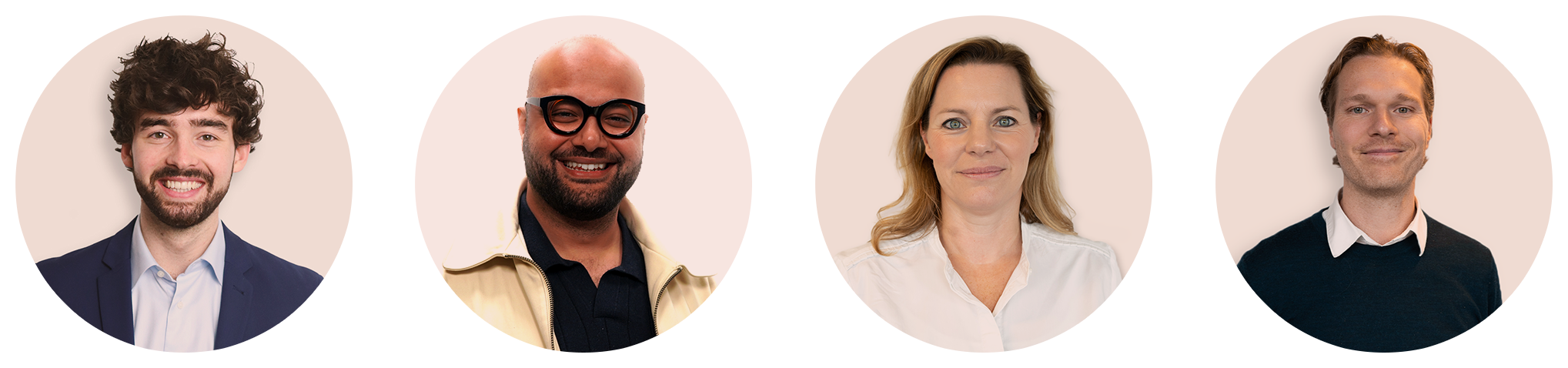
Sem Overduin
Public Policy & Affairs Manager
Sem.Overduin@headfirst.nl
Oifik Youssefi
Public Affairs Officer
Oifik.Youssefi@headfirst.nl
Maaike van Driel
Head of Legal
Maaike.vanDriel@headfirst.group
Thomas ten Veldhuijs
Senior Legal Counsel
Thomas.tenVeldhuijs@headfirst.nl