
Public Affairs colleagues Sem Overduin and Oifik Youssefi of HeadFirst Group co-authored the book *De ZZPuzzel*, a factual analysis of the self-employed issue. The book was the result of numerous discussions with labor market experts from academia, politics, and civil society. Persistent misinformation, one-sided perceptions, a lack of political will, and the complexity of labor law make this issue a complicated puzzle. In this series of articles, the authors speak with stakeholders who contribute an additional piece to the puzzle.
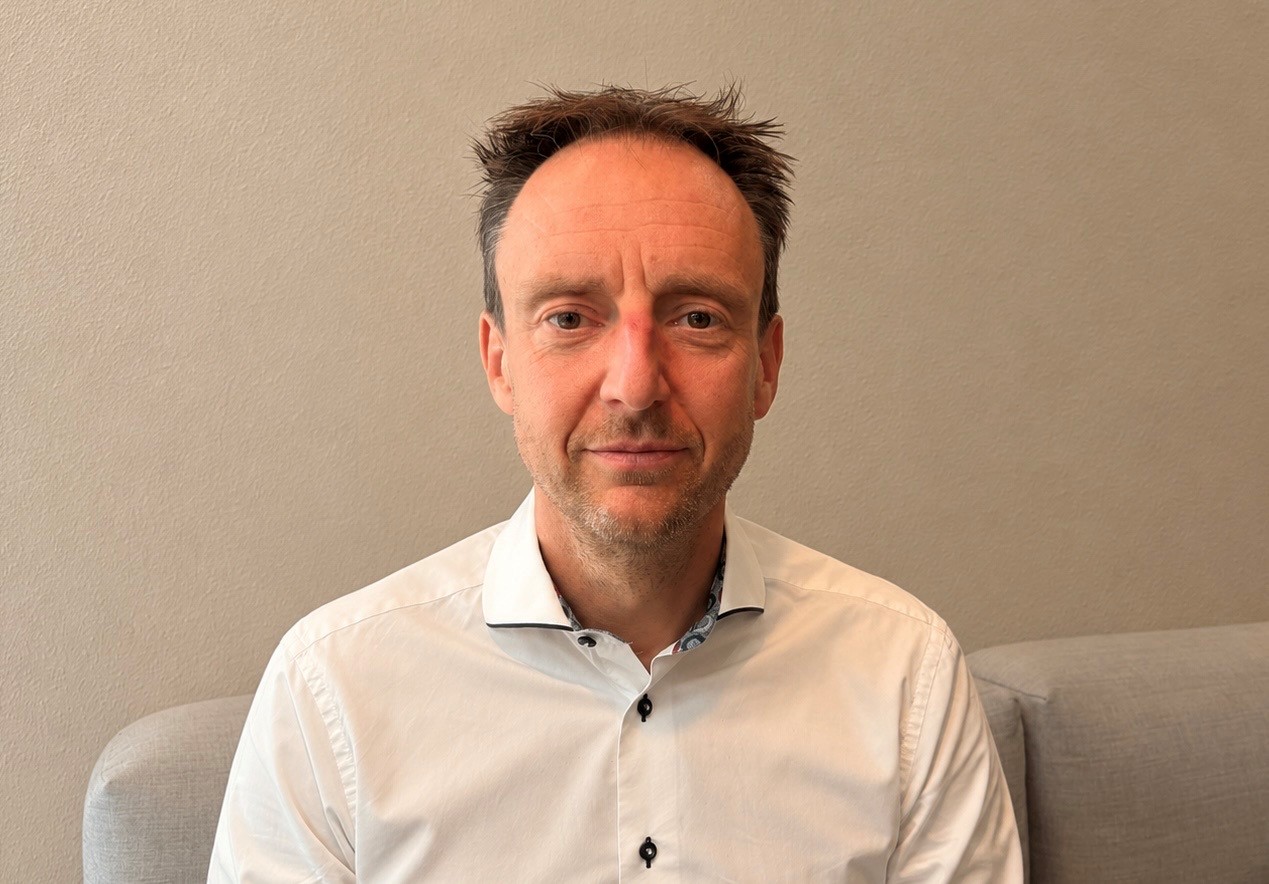
Lex Tabak has been following the self-employed issue for years from multiple perspectives. As a healthcare professional and founder of ZZP-erindezorg.nl, he has been closely monitoring developments related to bogus self-employment, enforcement, and labor market policy for years. Through his articles, he has emerged as a widely read critic of both politicians and the government. According to Tabak, current enforcement efforts targeting bogus self-employment are also affecting large groups of bona fide self-employed individuals; the policy is missing the mark; and the new campaign“Zo kan zzp wél” will only be effective if the government first manages to restore the trust of clients. Oifik Youssefi sits down with him for a conversation.
In your opinion, to what extent is the self-employed worker file a puzzle?
“As far as I’m concerned, this isn’t a puzzle. A puzzle assumes that we’re all working together toward the same end result. I seriously doubt that. I don’t know if we’re on our way to a solution or if we’re dealing more with a playing field where various parties are hoping for a solution, while a number of influential parties continue to reason from a single premise: employment is the norm.”
There are groups surrounding self-employed individuals who have been demonstrating for years that, for many people, self-employment is all about autonomy, control over one’s work, and professional freedom. The studies are in, the arguments have been exchanged, and the pros and cons have been discussed at length. Yet in many respects, we are still at the same point as we were twenty years ago.
That is why I do not view the self-employed issue as a puzzle that is being solved collectively. Rather, I see it as a strange game of chess in which some parties hope for change, while others cling to existing principles. Committees such as Borstlap have outlined comprehensive perspectives on the labor market, but if you look at the policies surrounding self-employed workers and the labor market, what you see above all is a shift toward less flexibility and more permanent employment. A modern vision for the labor market is still lacking, even though workers have been indicating for decades that there is a need for more flexibility.”
Which puzzle piece would you like to add to The ZZPuzzle?
“To me, that’s governance. What do we do when a policy has demonstrable effects that we don’t want? When we talk about tackling bogus self-employment, that must be based on hard data and empirical evidence. If it turns out afterward that the wrong group is being disproportionately affected, something must be done about it—especially if warnings about what has now become reality were already issued at the outset of the policy.”
As far as I’m concerned, politicians should draw conclusions from this. Members of Parliament are constantly asking critical questions, but real answers are lacking. Yet the policy is allowed to continue. Systematically monitoring the effects of policies proves difficult in a political arena grappling with ever-shorter half-lives. On the other hand, you have a bureaucracy where people often spend more time working on a single issue. This can effectively create a power imbalance in which senior bureaucrats appear to have more influence over the direction of policy than politicians themselves.”
As a self-employed person, how much trust do you have in politics and the government in 2026?
“I’ve been searching for a long time for the right way to put this. I’m critical—I make no secret of that—but I also trust in people’s good intentions. However, when it comes to this issue, I no longer believe what the government says. I trust that civil servants wake up in the morning with good intentions, but I don’t believe that what we’re being told reflects their true motives.”
Many people treat this issue as if it were a ballroom dance in which different perspectives must come together harmoniously. I see it more as a judo match. There is a fierce struggle for position, power, and execution.
What strikes me, for example, is how quickly policy can shift when it comes to measures that negatively affect self-employed individuals, and how far off in the future legislation intended to help them seems to be. Take, for instance, the lightning-fast phase-out of the starter tax deduction. In contrast, the Self-Employed Persons Act must pass through numerous bureaucratic hurdles before it (perhaps) sees the light of day in 2028. The years-long phase-out of tax deductions or the inclusion of occupational disability insurance (AOV) for self-employed individuals in a pension agreement are other examples. The “Zo kan zzp wél” campaign took half a year to get off the ground after it was announced. I see this as evidence of an agenda different from the one presented to the self-employed sector.
Labor law scholar Niels van der Neut argued in 2025 that low trust in the government and politics can be a breeding ground for misinformation. Do you recognize that picture?
“I certainly recognize that, and Van der Neut cites a study by the Social and Cultural Planning Office (SCP)here. This also applies to the self-employed issue. The misinformation surrounding this issue may arise because there is no concrete legislation in place. So, indeed, all sorts of things are being said online about the self-employed issue, because it’s a matter of interpretation. But isn’t the government contributing to this? I’ve also noticed that the national government provides selective information—information that more and more people are seeing through and no longer trusting. Take the bill on Clarification of the Assessment of Employment Relationships and Legal Presumption (VBAR). It was heavily based on the link between integration and employee status, while case law emphasizes that all circumstances of the employment relationship must be taken into account. The Deliveroo ruling lists nine factors that must be considered in conjunction with one another. If you then focus on just one or two elements and present them as the absolute truth, you come dangerously close to spreading misinformation.
Or the website www.hetjuistecontract.nl, which has been cited countless times by ministers. The site still has incorrect information online along the lines of “embedding = employment.” Yet this has never been legally tenable. All of this is allowed to continue, and no one is stepping in. It does seem as though there’s some kind of hidden agenda behind it. That’s why I myself made the shift from misinformation to disinformation.
The bigger issue for me is how situations like this can arise in the first place and what the agenda regarding self-employed workers actually is. My impression is that government officials are deliberately seeking leeway where it does not legally exist. Politicians are then called upon by the industry to correct this. That takes a lot of time. In the meantime, many clients are opting out of hiring self-employed workers. Logically, this causes mistrust toward the government.”
To what extent do you perceive a trust issue among self-employed professionals?
“In my sector—healthcare—I see this very clearly. It’s also the sector with the highest proportion of self-employed workers. Through ZZP-erindezorg.nl, we speak with people every day who are struggling with this.”
Trust is being eroded in two ways. First, by ignoring the root of the problem: poor working conditions in permanent employment. For decades, healthcare professionals have been saying they want to see changes in the way they work, but to no avail. As a result, some have gone on to work as self-employed professionals, only to find themselves in a highly accusatory atmosphere. That does nothing to foster trust. Second, the marginalization of self-employed professionals in the public sphere is a thorn in the side. It’s as if self-employment in healthcare and education weren’t allowed to exist, and bogus self-employment were a given. For years, the healthcare sector has served as a testing ground for policies targeting the self-employed. The first model agreement was launched in 2015, and enforcement against bogus self-employment began in the healthcare sector as early as 2023. Based on the message that “integration = employment,” we have now spent years perpetuating a false narrative. Years of casting suspicion on self-employed workers in healthcare have severely undermined trust. Years of casting suspicion on self-employed workers in the healthcare sector have severely undermined trust.
You’ve been critical of the way the government is handling the self-employed issue. What is the crux of that criticism?
“Everyone knows that we need to take a fundamentally different approach to the labor market, but this is still being ignored. Self-employment is not the problem, but in a sense a symptom of a labor market that struggles to accommodate different forms of work.”
A fundamentally different approach to the labor market must also include a reform of social security; therefore, that is not a reason to leave the current system as it is. What is missing is a genuine agenda for the future of work. There is no new vision for an integrated labor market, but rather a hidden agenda to bring everything back to permanent contracts. The elimination of zero-hour contracts, making temporary agency work more expensive, and placing obstacles in the way of self-employed workers are signs of this. Ministries continue to treat the symptoms without addressing the underlying causes.”
The cabinet is committed to consistency; in its letter to Parliament dated April 9, it describes this as “no zigzag policy.” Do you think that brings more peace of mind?
“It’s a powerful political slogan, but instead of using flowery language, you could also quote an old Dutch saying: ‘Better to turn back halfway than to go astray completely.’ As far as I’m concerned, the approach to the self-employed issue in recent years has been very consistent and focused on curbing the growth of this form of employment. It’s certainly fine that Minister Aartsen is making it clear that she wants to pursue a new policy. But not just in the future. If the current policy on tackling bogus self-employment is demonstrably affecting bona fide independent entrepreneurs right now—and you acknowledge that—then you need to make adjustments if you say you support the self-employed. Here, too, I have confidence in the intentions, but I don’t believe that ‘no zigzag policy’ is the real reason for inaction.”
Why do you think the previous government campaign, “Self-Employed: Yes or No,” was ineffective?
“Because that campaign relied heavily on premises that were already under debate. The VBAR’s notion that ‘integration = employment’ was already legally tenuous when an entire website containing information on the subject was launched. Certain elements of the Deliveroo ruling were selectively cited, thereby exacerbating the uncertainty surrounding the classification of the work. The logical consequence is that the focus was primarily on what is not permitted in collaborations with self-employed workers, based on a partial representation of the legal reality. This did not foster a broad understanding of the subject matter, but rather led to confusion, fear, and uncertainty.”
The government is now launching the "This Is How Self-Employed People Can Succeed" campaign. Do you think it will be more effective?
“I’ve called the previous campaign a fear campaign before. Fear triggers very different psychological mechanisms than rational considerations. If you scare people first, you can’t just fix that with a new slogan. Especially not if you’ve been fueling that fear and uncertainty for years.”
“Besides, the name speaks volumes. After all, self-employment has always been an option. If something that was already possible now requires a separate campaign, why was the original one launched in the first place? I’m still curious about the real agenda.”
What is absolutely essential for this campaign?
“An acknowledgment that the previous communication was too one-sided and misled clients. A mea culpa. If you don’t do that and just use different wording, people will continue to relate to the old image. Self-reflection is essential if the government wants to be credible. As far as I’m concerned, the government must first restore trust before a campaign like this can have any effect.”
What is your take on the proposed Self-Employed Persons Act?
“I think it’s a positive development that this may provide self-employed individuals with greater legal protection. At the same time, I see a pattern. As I said: measures that restrict self-employed individuals are implemented quickly, while measures intended to provide clarity take a long time.”
"In the meantime, the self-employed have to figure out for themselves how to get by. That creates unnecessary uncertainty."
In your opinion, what is the biggest mistake the government has made in recent years regarding self-employed workers?
“In the past, enforcement against bogus self-employment was linked to new legislation. Providing greater legal clarity was supposed to go hand in hand with enforcement. The idea was: first, more clarity on the rules; then, stricter enforcement. That promised clarity never materialized, but enforcement remained in place. There is still no new law that provides substantially more guidance in practice, while enforcement is now in full swing. Here, too, measures that hinder self-employment are being implemented right away, while those that support it are being pushed aside.”
The government frames this by stating that it is necessary to let the market readjust to a reality in which clients do not have carte blanche to work with self-employed individuals and in which the Tax Authority can actually take action. I understand that in and of itself, but you cannot adjust to a reality that is vague and uncertain. If you deviate from the original promise—first providing more clarity and then enforcing the rules—you actually create uncertainty.
"Many clients and self-employed individuals feel they are facing risks, while the fundamental questions they have been grappling with for years still haven’t been definitively answered. This only reinforces uncertainty in the market, when restoring confidence should actually be a key objective."
"As a government and as policymakers, you have to ask yourselves how you want to be perceived by nearly 1.3 million self-employed workers. That conversation isn't happening enough."
Suppose Minister Aartsen were sitting across from you tomorrow. What advice would you give him?
“As a minister, carry out what you stood for as a member of parliament. The unrest in 2026 is the same unrest that the VVD was concerned about in 2016. The arguments haven’t changed. Alleviate the fear surrounding temporary hiring. Under current legislation, this is only possible if this approach is discontinued, especially since it has been communicated so poorly. Enact legislation as soon as possible to provide greater clarity. And as far as I’m concerned: suspend enforcement until the promised clarity is actually in place.”