
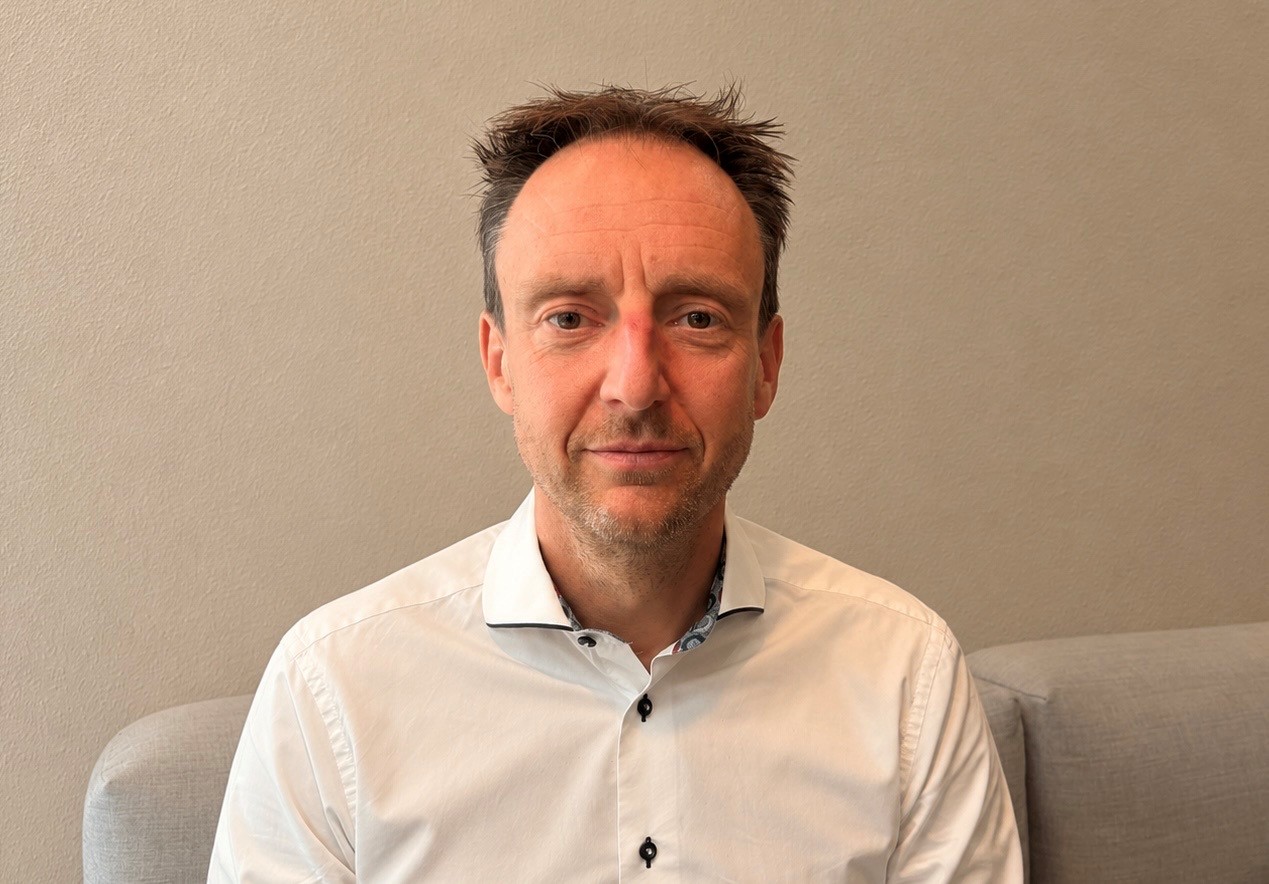
The government must first restore trust before new campaigns can be effective
Public Affairs colleagues Sem Overduin and Oifik Youssefi of HeadFirst Group co-authored the book *De ZZPuzzel*, a factual analysis of the self-employed issue. The book was the result of numerous discussions with labor market experts from academia, politics, and civil society. Persistent misinformation, one-sided perceptions, a lack of political will, and the complexity of labor law make this issue a complicated puzzle. In this series of articles, the authors speak with stakeholders who contribute an additional piece to the puzzle.
Lex Tabak has been following the self-employed issue for years from multiple perspectives. As a healthcare professional and founder of ZZP-erindezorg.nl, he has been closely monitoring developments related to bogus self-employment, enforcement, and labor market policy for years. Through his articles, he has emerged as a widely read critic of both politicians and the government. According to Tabak, current enforcement efforts targeting bogus self-employment are also affecting large groups of bona fide self-employed individuals; the policy is missing the mark; and the new campaign“Zo kan zzp wél” will only be effective if the government first manages to restore the trust of clients. Oifik Youssefi sits down with him for a conversation.
In your opinion, to what extent is the self-employed worker file a puzzle?
“As far as I’m concerned, this isn’t a puzzle. A puzzle assumes that we’re all working together toward the same end result. I seriously doubt that. I don’t know if we’re on our way to a solution or if we’re dealing more with a playing field where various parties are hoping for a solution, while a number of influential parties continue to reason from a single premise: employment is the norm.”
There are groups surrounding self-employed individuals who have been demonstrating for years that, for many people, self-employment is all about autonomy, control over one’s work, and professional freedom. The studies are in, the arguments have been exchanged, and the pros and cons have been discussed at length. Yet in many respects, we are still at the same point as we were twenty years ago.
That is why I do not view the self-employed issue as a puzzle that is being solved collectively. Rather, I see it as a strange game of chess in which some parties hope for change, while others cling to existing principles. Committees such as Borstlap have outlined comprehensive perspectives on the labor market, but if you look at the policies surrounding self-employed workers and the labor market, what you see above all is a shift toward less flexibility and more permanent employment. A modern vision for the labor market is still lacking, even though workers have been indicating for decades that there is a need for more flexibility.”
Which puzzle piece would you like to add to The ZZPuzzle?
“To me, that’s governance. What do we do when a policy has demonstrable effects that we don’t want? When we talk about tackling bogus self-employment, that must be based on hard data and empirical evidence. If it turns out afterward that the wrong group is being disproportionately affected, something must be done about it—especially if warnings about what has now become reality were already issued at the outset of the policy.”
As far as I’m concerned, politicians should draw conclusions from this. Members of Parliament are constantly asking critical questions, but real answers are lacking. Yet the policy is allowed to continue. Systematically monitoring the effects of policies proves difficult in a political arena grappling with ever-shorter half-lives. On the other hand, you have a bureaucracy where people often spend more time working on a single issue. This can effectively create a power imbalance in which senior bureaucrats appear to have more influence over the direction of policy than politicians themselves.”
As a self-employed person, how much trust do you have in politics and the government in 2026?
“I’ve been searching for a long time for the right way to put this. I’m critical—I make no secret of that—but I also trust in people’s good intentions. However, when it comes to this issue, I no longer believe what the government says. I trust that civil servants wake up in the morning with good intentions, but I don’t believe that what we’re being told reflects their true motives.”
Many people treat this issue as if it were a ballroom dance in which different perspectives must come together harmoniously. I see it more as a judo match. There is a fierce struggle for position, power, and execution.
What strikes me, for example, is how quickly policy can shift when it comes to measures that negatively affect self-employed individuals, and how far off in the future legislation intended to help them seems to be. Take, for instance, the lightning-fast phase-out of the starter tax deduction. In contrast, the Self-Employed Persons Act must pass through numerous bureaucratic hurdles before it (perhaps) sees the light of day in 2028. The years-long phase-out of tax deductions or the inclusion of occupational disability insurance (AOV) for self-employed individuals in a pension agreement are other examples. The “Zo kan zzp wél” campaign took half a year to get off the ground after it was announced. I see this as evidence of an agenda different from the one presented to the self-employed sector.
Labor law scholar Niels van der Neut argued in 2025 that low trust in the government and politics can be a breeding ground for misinformation. Do you recognize that picture?
“I certainly recognize that, and Van der Neut cites a study by the Social and Cultural Planning Office (SCP)here. This also applies to the self-employed issue. The misinformation surrounding this issue may arise because there is no concrete legislation in place. So, indeed, all sorts of things are being said online about the self-employed issue, because it’s a matter of interpretation. But isn’t the government contributing to this? I’ve also noticed that the national government provides selective information—information that more and more people are seeing through and no longer trusting. Take the bill on Clarification of the Assessment of Employment Relationships and Legal Presumption (VBAR). It was heavily based on the link between integration and employee status, while case law emphasizes that all circumstances of the employment relationship must be taken into account. The Deliveroo ruling lists nine factors that must be considered in conjunction with one another. If you then focus on just one or two elements and present them as the absolute truth, you come dangerously close to spreading misinformation.
Or the website www.hetjuistecontract.nl, which has been cited countless times by ministers. The site still has incorrect information online along the lines of “embedding = employment.” Yet this has never been legally tenable. All of this is allowed to continue, and no one is stepping in. It does seem as though there’s some kind of hidden agenda behind it. That’s why I myself made the shift from misinformation to disinformation.
The bigger issue for me is how situations like this can arise in the first place and what the agenda regarding self-employed workers actually is. My impression is that government officials are deliberately seeking leeway where it does not legally exist. Politicians are then called upon by the industry to correct this. That takes a lot of time. In the meantime, many clients are opting out of hiring self-employed workers. Logically, this causes mistrust toward the government.”
To what extent do you perceive a trust issue among self-employed professionals?
“In my sector—healthcare—I see this very clearly. It’s also the sector with the highest proportion of self-employed workers. Through ZZP-erindezorg.nl, we speak with people every day who are struggling with this.”
Trust is being eroded in two ways. First, by ignoring the root of the problem: poor working conditions in permanent employment. For decades, healthcare professionals have been saying they want to see changes in the way they work, but to no avail. As a result, some have gone on to work as self-employed professionals, only to find themselves in a highly accusatory atmosphere. That does nothing to foster trust. Second, the marginalization of self-employed professionals in the public sphere is a thorn in the side. It’s as if self-employment in healthcare and education weren’t allowed to exist, and bogus self-employment were a given. For years, the healthcare sector has served as a testing ground for policies targeting the self-employed. The first model agreement was launched in 2015, and enforcement against bogus self-employment began in the healthcare sector as early as 2023. Based on the message that “integration = employment,” we have now spent years perpetuating a false narrative. Years of casting suspicion on self-employed workers in healthcare have severely undermined trust. Years of casting suspicion on self-employed workers in the healthcare sector have severely undermined trust.
You’ve been critical of the way the government is handling the self-employed issue. What is the crux of that criticism?
“Everyone knows that we need to take a fundamentally different approach to the labor market, but this is still being ignored. Self-employment is not the problem, but in a sense a symptom of a labor market that struggles to accommodate different forms of work.”
A fundamentally different approach to the labor market must also include a reform of social security; therefore, that is not a reason to leave the current system as it is. What is missing is a genuine agenda for the future of work. There is no new vision for an integrated labor market, but rather a hidden agenda to bring everything back to permanent contracts. The elimination of zero-hour contracts, making temporary agency work more expensive, and placing obstacles in the way of self-employed workers are signs of this. Ministries continue to treat the symptoms without addressing the underlying causes.”
The cabinet is committed to consistency; in its letter to Parliament dated April 9, it describes this as “no zigzag policy.” Do you think that brings more peace of mind?
“It’s a powerful political slogan, but instead of using flowery language, you could also quote an old Dutch saying: ‘Better to turn back halfway than to go astray completely.’ As far as I’m concerned, the approach to the self-employed issue in recent years has been very consistent and focused on curbing the growth of this form of employment. It’s certainly fine that Minister Aartsen is making it clear that she wants to pursue a new policy. But not just in the future. If the current policy on tackling bogus self-employment is demonstrably affecting bona fide independent entrepreneurs right now—and you acknowledge that—then you need to make adjustments if you say you support the self-employed. Here, too, I have confidence in the intentions, but I don’t believe that ‘no zigzag policy’ is the real reason for inaction.”
Why do you think the previous government campaign, “Self-Employed: Yes or No,” was ineffective?
“Because that campaign relied heavily on premises that were already under debate. The VBAR’s notion that ‘integration = employment’ was already legally tenuous when an entire website containing information on the subject was launched. Certain elements of the Deliveroo ruling were selectively cited, thereby exacerbating the uncertainty surrounding the classification of the work. The logical consequence is that the focus was primarily on what is not permitted in collaborations with self-employed workers, based on a partial representation of the legal reality. This did not foster a broad understanding of the subject matter, but rather led to confusion, fear, and uncertainty.”
The government is now launching the "This Is How Self-Employed People Can Succeed" campaign. Do you think it will be more effective?
“I’ve called the previous campaign a fear campaign before. Fear triggers very different psychological mechanisms than rational considerations. If you scare people first, you can’t just fix that with a new slogan. Especially not if you’ve been fueling that fear and uncertainty for years.”
“Besides, the name speaks volumes. After all, self-employment has always been an option. If something that was already possible now requires a separate campaign, why was the original one launched in the first place? I’m still curious about the real agenda.”
What is absolutely essential for this campaign?
“An acknowledgment that the previous communication was too one-sided and misled clients. A mea culpa. If you don’t do that and just use different wording, people will continue to relate to the old image. Self-reflection is essential if the government wants to be credible. As far as I’m concerned, the government must first restore trust before a campaign like this can have any effect.”
What is your take on the proposed Self-Employed Persons Act?
“I think it’s a positive development that this may provide self-employed individuals with greater legal protection. At the same time, I see a pattern. As I said: measures that restrict self-employed individuals are implemented quickly, while measures intended to provide clarity take a long time.”
"In the meantime, the self-employed have to figure out for themselves how to get by. That creates unnecessary uncertainty."
In your opinion, what is the biggest mistake the government has made in recent years regarding self-employed workers?
“In the past, enforcement against bogus self-employment was linked to new legislation. Providing greater legal clarity was supposed to go hand in hand with enforcement. The idea was: first, more clarity on the rules; then, stricter enforcement. That promised clarity never materialized, but enforcement remained in place. There is still no new law that provides substantially more guidance in practice, while enforcement is now in full swing. Here, too, measures that hinder self-employment are being implemented right away, while those that support it are being pushed aside.”
The government frames this by stating that it is necessary to let the market readjust to a reality in which clients do not have carte blanche to work with self-employed individuals and in which the Tax Authority can actually take action. I understand that in and of itself, but you cannot adjust to a reality that is vague and uncertain. If you deviate from the original promise—first providing more clarity and then enforcing the rules—you actually create uncertainty.
"Many clients and self-employed individuals feel they are facing risks, while the fundamental questions they have been grappling with for years still haven’t been definitively answered. This only reinforces uncertainty in the market, when restoring confidence should actually be a key objective."
"As a government and as policymakers, you have to ask yourselves how you want to be perceived by nearly 1.3 million self-employed workers. That conversation isn't happening enough."
Suppose Minister Aartsen were sitting across from you tomorrow. What advice would you give him?
“As a minister, carry out what you stood for as a member of parliament. The unrest in 2026 is the same unrest that the VVD was concerned about in 2016. The arguments haven’t changed. Alleviate the fear surrounding temporary hiring. Under current legislation, this is only possible if this approach is discontinued, especially since it has been communicated so poorly. Enact legislation as soon as possible to provide greater clarity. And as far as I’m concerned: suspend enforcement until the promised clarity is actually in place.”

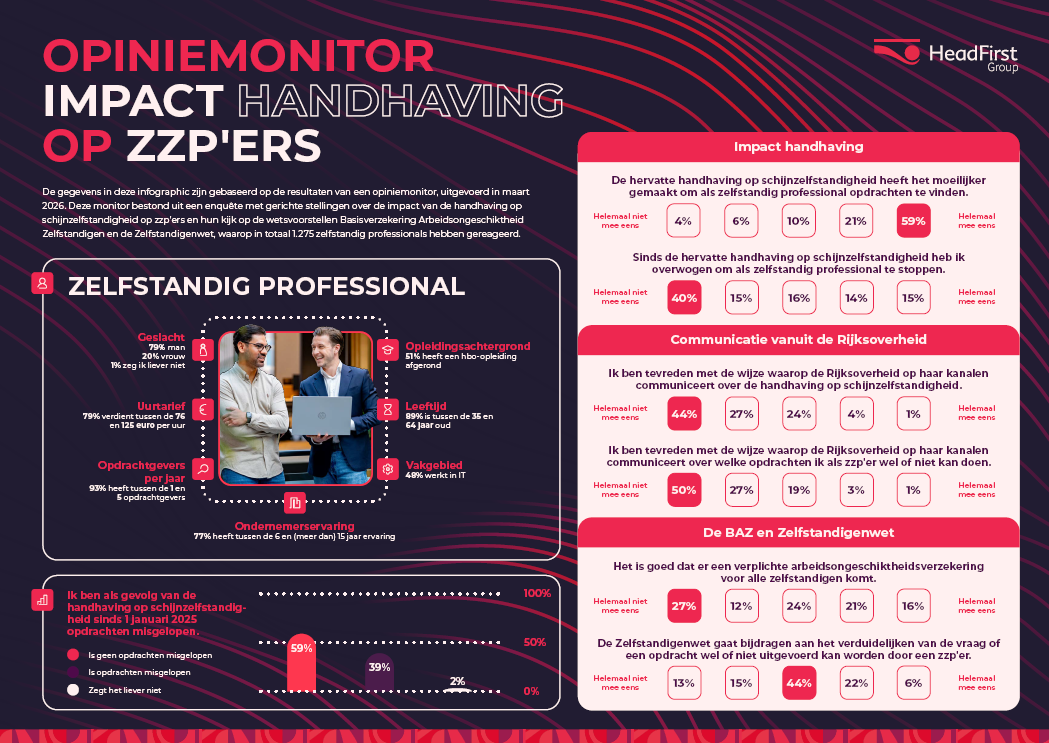
Opinion Poll on the Impact of Enforcement on Self-Employed Individuals
How do self-employed professionals perceive the impact of enforcement measures on bogus self-employment, and what are their views on the proposed legislation regarding Basic Disability Insurance for the Self-Employed and the Self-Employed Persons Act? We asked 1,275 professionals affiliated with HeadFirst Group this question in March 2026. See the results below.

Freelance IT professionals are benefiting from the explosive demand for AI skills
Demand for AI skills is growing 2.5 times faster in IT consulting projects than in permanent positions, and rates are following suit
Hoofddorp – AI skills such as vibe coding and prompt engineering are increasingly becoming a requirement in the skill sets of IT professionals. Since 2024, demand for AI skills in temporary assignments has risen by 161 percent. By comparison, demand for these skills has also grown significantly in ICT job postings, but by 65 percent. This is according to the latest edition of theTalent Monitor, a joint publication by HR tech service provider HeadFirst Group and labor market data specialistIntelligence Group.
Highest salaries for IT architect and management roles
Freelancers benefit not only from a wider range of AI assignments but also from higher hourly rates. Roles requiring AI expertise are among the highest-paying IT assignments. For example, enterprise architects earn an average of €127 per hour, followed by security architects (€125) and information managers (€122). These high rates are not an isolated phenomenon: in 2025, the average hourly rate for IT professionals will exceed €100 per hour for the first time. That represents a 4.7 percent increase compared to the previous year.
Geert-Jan Waasdorp, CEO of Intelligence Group: “Demand for AI skills is currently growing much faster in the temporary workforce market than in permanent positions. Organizations are increasingly turning to external professionals to develop and implement AI applications more quickly on a project basis. This makes the temporary workforce a key driver of innovation. And for professionals, AI knowledge and expertise lead to higher rates.”
Microservices and OpenShift are growing in popularity
In addition to AI, demand for other specialized IT skills among external professionals is also growing. Development and application skills, in particular, are seeing a sharp increase. For example, demand for microservices rose by 158 percent, while relational databases and the OpenShift container platform both increased by 128 percent.
At the same time, the contract market is becoming more competitive. Between the end of 2024 and the end of 2025, the number of contracts for external professionals has decreased by nearly 20 percent. The number of self-employed professionals has fallen by 8 percent over the same period, and 68 percent of all employed IT professionals now have permanent contracts—2 percent more than at the end of 2024.
“AI is transforming both the work of IT professionals and the way organizations hire talent,” says Marion van Happen, CEO of HeadFirst Group. “Organizations are looking for professionals who can immediately apply new technology to existing systems and processes. This presents enormous opportunities for freelancers and professionals employed by vendors, provided they continue to develop their specialized skills and clearly position themselves in the market.”

Saskia Kapper appointed Director of Customer Success at HeadFirst Group
New leadership addition strengthens customer focus and industry impact
HR tech service provider HeadFirst Group is expanding its leadership team with Saskia Kapper as Director of Customer Success, effective March 2, 2026. In this role, she will be responsible for the Customer Success team, including sector-focused teams, MSP operations, solutions design & implementation, and SOW & services procurement. She will ensure that customers receive optimal service, customer value is increased, and tailor-made solutions are delivered, while strengthening commercial growth and customer satisfaction.
Investing in customer focus and technology
The appointment of Saskia Kapper fits within HeadFirst Group's broader strategy: investing in leadership, customer focus, and technology to create maximum impact. With an open and scalable platform and a European leadership structure, the organization aims to be a leader in workforce solutions and help organizations work faster, smarter, and more effectively. "With Kapper's arrival, we are once again strengthening our leadership in the Netherlands," says Allard van Dam, Country Manager Netherlands at HeadFirst Group. "Since I started at the beginning of this year, we have been working hard to build a team that is customer-focused, future-proof, and technologically advanced. Kapper's experience and vision fit in perfectly with this and will help us to further realize our ambition as a market leader in workforce solutions."
Kapper adds: "I look forward to leading the Customer Success team and supporting our customers in a strategic way. It's about delivering solutions that really make a difference, deepening customer relationships, and ensuring that every customer gets the most out of our products, services, and industry expertise. Together, we enable organizations and professionals to deploy their talent faster, smarter, and more effectively."

Extensive experience and proven leadership
Kapper brings more than 20 years of experience in HR, recruitment, and workforce solutions. She began her career at Randstad and then worked at StarJob and Tempo-Team, where she managed teams and strategic accounts. At Hero Business Solutions and later Hero Interim Professionals, she held several leadership roles, including Director and Chief Commercial Officer, where she was responsible for commercial growth, strategic partnerships, and innovation in HR processes. Since March 2024, Kapper has also been chair of the Bovib trade association, where she represents the interests of intermediaries and brokers and helps advance the sector.
With this experience and ambition in mind, Kapper is now making the move to HeadFirst Group. "I chose HeadFirst Group because it is the perfect place to apply my experience in HR, strategy, and customer-focused leadership on a large scale," says Kapper. "The ambition, technology, and focus on customer impact are fully in line with how I want to help organizations move forward."

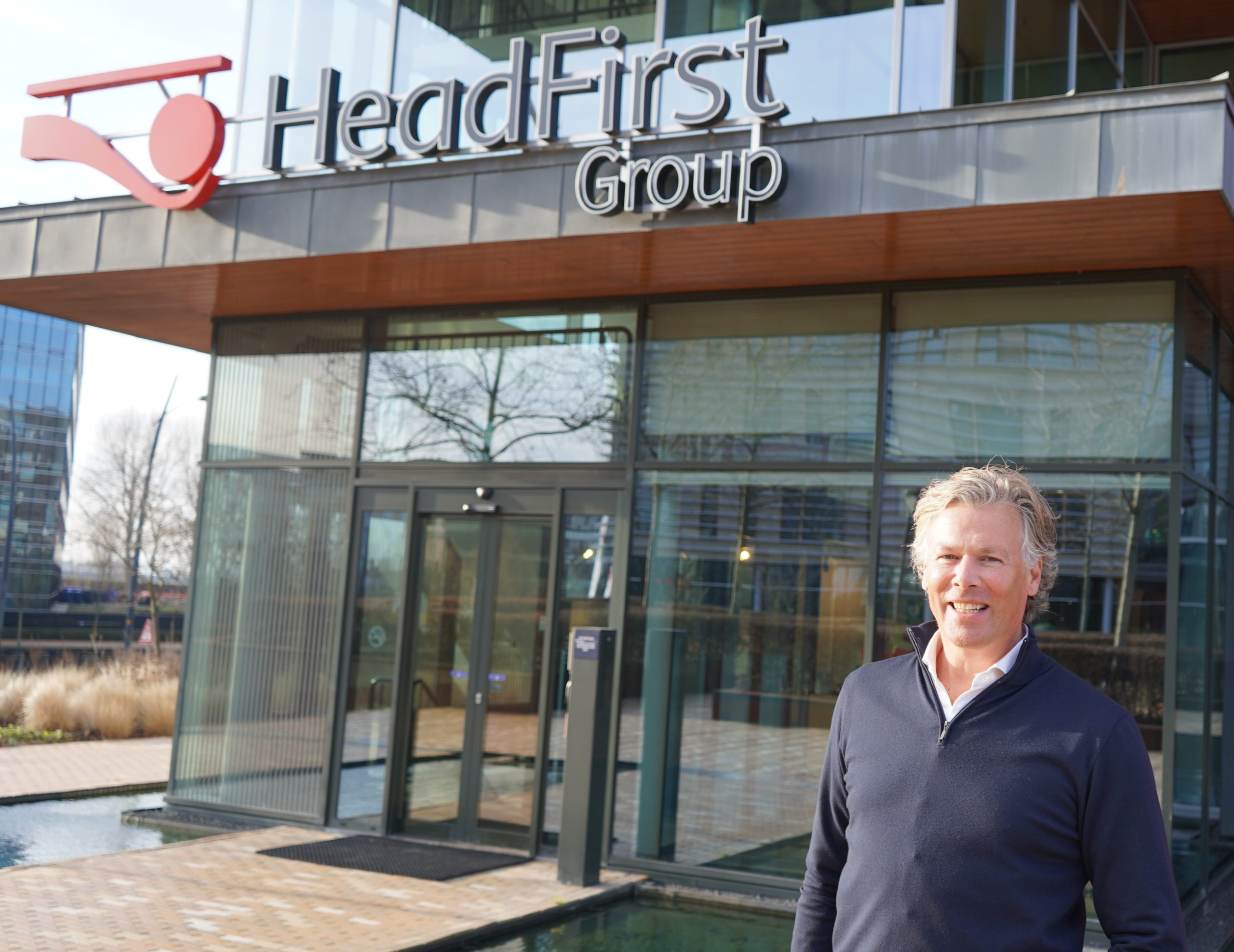
Allard van Dam appointed Country Manager Netherlands at HeadFirst Group
HeadFirst Group strengthens leadership in the Netherlands and accelerates impact on the labor market
On January 19, 2026, Allard van Dam started as Country Manager Netherlands at HR tech service provider HeadFirst Group. In this role, he leads the Dutch operation and strengthens the organization to better connect talent, technology, and organizations.
European structure, maximum impact
Organizations are facing a new reality: data, technology, and collaboration determine how talent is deployed today and tomorrow. For HeadFirst Group, this is the moment to make an impact. With Allard at the helm of the Dutch operation, the organization is accelerating its ambition to better connect organizations and professionals as a market leader and be ready for further growth.
We are also seeing technology playing an increasingly important role in better serving the labor market within the sector. "As market leader, we feel a responsibility to continue to take the lead in this area and to work together to move the sector forward," says CEO Marion van Happen. "Our European leadership structure enables us to combine commercial clout, operational expertise, and talent management even more effectively. Allard will continue to expand the Dutch operation, while I, as CEO, will continue to lead the strategic course and international growth in Europe. In this way, we ensure that technology, sector knowledge, and collaboration have maximum impact for our clients and professionals."

Back to roots and proven experience
Van Dam returns to his roots in HR and recruitment, bringing with him extensive experience in leadership roles at organizations such as Randstad, Synergie, and Vermaat. This background allows him to combine strategic insight, operational leadership, and sector knowledge, making him ideally suited to further grow HeadFirst Group in the Netherlands and connect it with the European operation.
Allard's appointment fits in with HeadFirst Group's broader vision: investing in leadership, structure, and technology to increase impact and better serve the labor market. By combining commercial clout, operational expertise, and innovation, HeadFirst Group is building a future-proof model that helps organizations work faster, smarter, and more effectively. "The HR market is evolving towards more control, collaboration, and smart technology. HeadFirst Group is already playing a leading role in this," says Van Dam. "I look forward to working with colleagues, customers, and partners to build solutions that really make a difference."

HeadFirst Group retains Gold EcoVadis rating and rises to top 3% worldwide
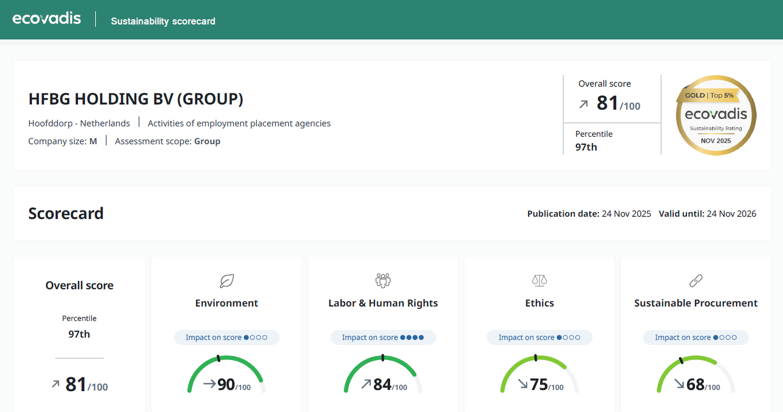
At HeadFirst Group, we believe that sustainability is not a trend, but a responsibility. Not only towards our clients and professionals, but also towards the world around us. Thanks to our structural ESG policy and concrete actions, we have retained our Gold EcoVadis rating and our score has even risen to 81 points this year. This puts us among the top 3% of companies worldwide.
EcoVadis, the global standard for sustainability assessments, applied stricter criteria this year. As a result, many companies saw their scores drop. Not us. On the contrary: our score rose from 74 to 81 points. This result shows that our ESG policy is not only solid, but also future-proof.
What is behind that score?
We score highly on the Environment theme: with 90 out of 100 points, we are the leader in carbon management. This is no coincidence: we have ambitious CO₂ reduction targets and a concrete action plan, ranging from energy audits to the reuse of IT hardware and the purchase of green electricity. We report transparently, including Scope 1, 2, and 3 emissions, and have our figures verified externally. Measurable impact, not empty promises.
We also demonstrate our values in the area of social responsibility. We are a Great Place to Work, invest in diversity and well-being, and offer fair opportunities for everyone. Governance is firmly established, with clear frameworks for ethics, information security, and responsible supply chain management. Supported by international quality and safety standards. Our next challenge lies in our supply chain: further embedding sustainable procurement. The foundations have been laid, now we are going to take it to the next level.
B Corp certification
Earlier this year, we also became a B Corp, a milestone that confirms that our commitment to people, the environment, and transparency is deeply embedded in our organization. While EcoVadis measures our performance on four ESG themes, B Lab assesses organizations holistically on their overall social impact. The assessment is rigorous: organizations are extensively evaluated in five areas (governance, employees, environment, customers, and community) and must score at least 80 points in the B Impact Assessment. We succeeded. In fact, our certification shows that we are structurally working to make a positive impact and take responsibility for all stakeholders. For us, B Corp status is not an end goal, but an obligation to continue to improve.
Sustainability as a guiding principle
At HeadFirst Group, sustainability is not a separate project, but the common thread running through our strategy. We work with recognized standards and certifications, monitor our carbon footprint, and actively involve our suppliers in our sustainability goals. In this way, we build sustainable value for today and tomorrow.
And why are we doing this? Because we believe that a fair labor market, transparency, and a healthy planet go hand in hand. With our improved EcoVadis score and B Corp status, we are setting a course for a future in which sustainable choices and social responsibility are a matter of course. We invite everyone to join us.

Do you have questions about this post? Feel free to contact us through one of our colleagues.
Natasja Spooren-Wassenaar
Manager Communications
natasja.spooren-wassenaar@headfirst.nl
Thomas ten Veldhuijs
Senior Legal Counsel
thomas.tenVeldhuijs@headfirst.nl
Gemma Keijzer
Head of Quality & Compliance
gemma.Keijzer@headfirst.nl
Skip Saegaert
SROI Coordinator
skip.Saegaert@headfirst.nl

Take the robot out of the human
Marijn van de Poel is Managing Director of Ciphix. This innovative company's mission is "Take the robot out of the human. "With some 60 specialists, we automate as many routine tasks and cognitive decisions for our clients as possible," explains Marijn. "Using Hyperautomation technologies such as Robotic Process Automation (RPA), Artificial Intelligence (AI), Process Mining and Low-Code, we develop 'digital assistants', so that our clients' employees can focus on more important and more interesting aspects of their work."
"The latter is crucial. Everyone is struggling with staff shortages nowadays, so it's a real waste if you let well-qualified employees spend time on repetitive work. People are much happier if they can work on new challenges and customer requests. It's what stimulates and inspires them. If people spend less time on routine jobs, the work will be fun and interesting, and they will enjoy working for you. That's what we aim for at Ciphix."
Balance between tech and touch
Marijn explains how this works in practice, describing the first digital assistants Ciphix introduced at HeadFirst Group. "HeadFirst Group handles tens of thousands of hiring transactions every year. A complex process involves an application, publication, matching, and finally a contract. In 2022, with the help of digital assistant Benthe, we fully automated the uploading of assignments. The process is flawless and much faster, and recruiters now have more time left for the matching process itself. It really creates a better balance between tech and touch, as they call it at HeadFirst Group."
Streamer
"The process is flawless and much faster, and recruiters now have more time left for the matching process itself."
Bring human into the robot
"Together with HeadFirst Group, we're already looking ahead. For example, we're considering ways in which AI could make faster and smarter analyses of the data in applications and CVs, supporting recruiters in terms of content. It's just one of the possibilities, and the great thing is that HeadFirst Group is completely in the lead. Our technical solutions can help you achieve your goals, but you do need to have the mindset to want to work differently."
"So why do we use personal names? That's a very deliberate choice, because it helps us to make our solutions more recognizable and bring a bit of the 'human into the robot'. New software with a techy name doesn't mean much to most people. No one likes SAP or Office, but everyone loves Benthe!"


IceLake Capital backs HeadFirst Group as investment partner to accelerate future growth
HeadFirst Group, the leading HR-tech service provider for professionals in the Benelux, announces it has reached an agreement with IceLake Capital to join as the new investor to enable expansion of HeadFirst Group in Europe.
HeadFirst Group delivers a suite of HR services that tailor to the needs of large and mid-size enterprise clients in the private and public sector, with over 20,000 highly skilled professionals active daily. The company has a proven track record of strong organic as well as M&A growth, doubling its size over the past two years to over two billion revenue today. Also HeadFirst Group's core market segments Managed Service Providers (MSP) and sourcing of STEM-profiles, continue to show positive momentum. With an established presence in the Benelux, the company sees ample opportunities to expand in Europe. With IceLake's commitment, there is solid financing in place to realize these ambitions.
Financing for growth
In IceLake, HeadFirst Group has found a pragmatic and very ambitious shareholder that suits the company and its entrepreneurial culture. IceLake was founded by experienced private equity professionals and entrepreneurs who have extensive experience with building and growing companies. IceLake's initial investment is part of a broader funding commitment towards the HeadFirst Group international M&A roadmap.
Han Kolff, Chairman of the Board of HeadFirst Group, said, "We are very pleased to welcome IceLake as a strong financial investor, next to our existing financing partner Kartesia and our founders. It is testament to the great achievements of our employees in professionalizing our organization and realizing solid growth in the past years. Having IceLake on board, we will be able to realize our strategic goals across Europe."
Bastiaan Hagenouw of IceLake added: "We are very excited to back HeadFirst Group, as we appreciate how they have developed into a company with a unique and market leading position in the HR services space. We look forward to working with their experienced board and management team to realise their ambitions and providing its innovative, value-added solutions to an even wider range of clients, suppliers and professionals."
Jean Diercxsens, Director at Kartesia, agrees: "We have seen HeadFirst Group more than double in size and profitability during the two years that we have been involved as financial sponsor and remain committed to be part of this journey. Kartesia is delighted with IceLake as the new investor, which will allow HeadFirst Group to pursue its profitable growth and international expansion."
The transaction is subject to customary competition approvals.
About HeadFirst Group
HeadFirst Group is a leading, international HR-tech service provider and the largest platform for professionals in the Netherlands. The organization offers a wide range of HR solutions, such as Managed Service Providing, Recruitment Process Outsourcing, IT Sourcing & Recruitment and HR consultancy. Daily, more than twenty thousand professionals work for over five hundred clients in Europe, with which HeadFirst Group realizes an annual turnover of over two billion euros. The main brands of HeadFirst Group are MSP (including intermediary services) labels HeadFirst, Between and Staffing Management Services, RPO and recruitment specialist Sterksen and IT talent sourcer StarApple.
About IceLake
Icelake is a private equity firm which focuses on partnering with entrepreneurs and management teams to support their (international) growth ambitions.
About Kartesia
Kartesia provides bespoke credit & capital solutions to leading mid-market companies headquartered in Europe. The group manages over EUR 5 billion and operates out of local offices across Europe.
HeadFirst Group acquires successful IT talent sourcer StarApple
HR technology service provider HeadFirst Group Adds StarApple Group, consisting the brandsStarAppleandStackOps, to its organization. Both companies are specialized in sourcing IT and digital specialists. HeadFirst Group hereby takes another step in strengthening its portfolio of solutions for workforce challenges in the professionals segment: the current high-tech solutions of HeadFirst Group are enriched with the services with a great human touch of StarApple Group.
StarApple Group, is an ambitious and young organization, founded in 2008 and since then grown into a successful IT talent sourcer. StarApple Group has already successfully connected more than 10,000 specialists to a variety of organizations. Caner Hamamioglu, General Director at StarApple Group: "Growing talent is our mission. We do this by carefully connecting professionals from our network to assignments, where professionals not only do what they have done before with other clients, but are also challenged to take a step forward in their development. Design your career, is how we call it. With the collaboration with HeadFirst Group, we can do this on an even larger scale and we are looking forward to that tremendously."
Responding to dynamic market
HeadFirst Group foresees that combining various services is necessary to continue to solve all client issues in the current dynamic global job market. Marion van Happen, CEO at HeadFirst Group: "The scarcity will not disappear in the coming years. This requires creativity in opening up the market. We believe that combining high-tech solutions with services with a great human touch is the key to customer success. For us, those customers are both clients - who we continuously provide with mission critical talent - and professionals, who we actively help from assignment to assignment with the most attractive clients."
StarApple Group remains independent
StarApple will become an independent brand within HeadFirst Group, retaining its own identity. The current management will continue to lead the organization in its growth strategy into the future. amamioglu: "HeadFirst Group will be the driving force behind StarApple. With our enthusiastic team of over eighty colleagues, we will continue to offer a full service recruitment solution for our clients and professionals. And we get access to the group's platform, which gives us extra power to realize our growth ambitions."
About HeadFirst Group
HeadFirst Group is a leading international HR service provider and a specialist in the professional organization of external hiring. The company offers a variety of HR-solutions, including contracting, matchmaking, MSP-services, and business consultancy. Daily, more than fifteen thousand professionals work for over four hundred clients in Europe, with which HeadFirst Group realizes an annual turnover of more than €1.5bn. HeadFirst Group's main brands are intermediaries HeadFirst, Between, recruitment specialists Sterksen and Myler and managed service provider Staffing Management Services.
About StarApple Group
StarApple is an ambitious and young organization, founded in 2008 and since then it has grown into a successful IT talent sourcer. In 2018, a second brand was established in the form of StackOps, specializing in the mediation of professionals in IT infrastructure, cloud and security. With a team of more than eighty colleagues, StarApple and StackOps offer full service recruitment solutions for our clients and professionals. Together they have successfully connected more than 10,000 specialists to hundreds of organizations.
Note to editors
Do you have any questions or comments regarding this press release? Please contact Bart van der Geest, marketing & communications manager at HeadFirst Group, on 023 - 568 56 30 or bart.vandergeest@headfirst.nl.


Talent Monitor: Forecast tariff development professionals 2022
Talent Monitor: Forecast tariff development professionals 2022
Labor market data specialist Intelligence Group has developed a unique rate prediction model, which includes data from HeadFirst Group. At the end of 2021 we presented the first prediction, which has started an annual tradition.
On average, highly educated professionals will earn 5% more.
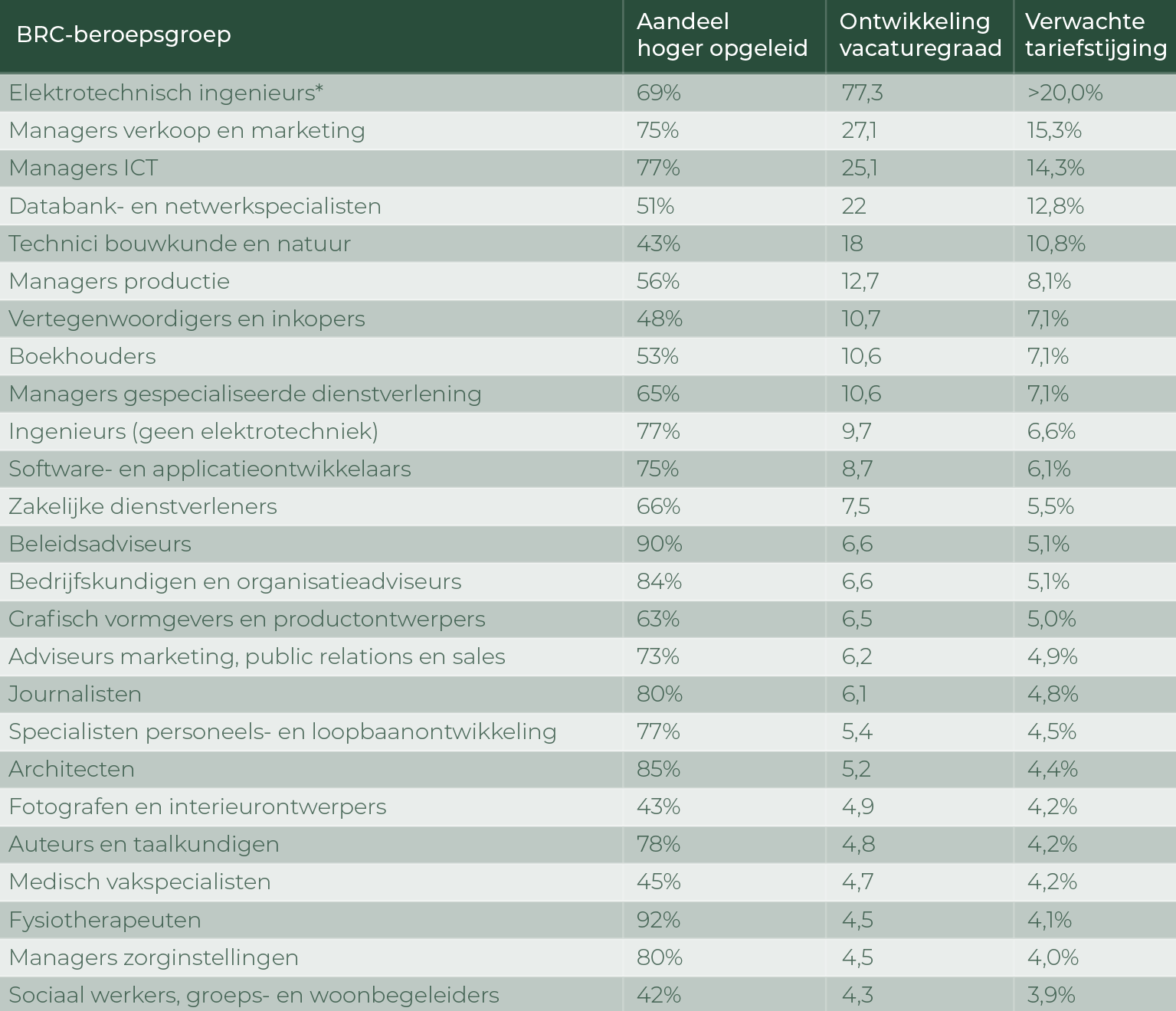
Self-employed persons without employees and agencies that second professionals will probably raise their fees considerably in 2022. On average, highly educated professionals will be able to raise their hourly rates by 5 percent in 2022. The highest increases are expected in vocational professions, with machine fitters expected to make the greatest wage jump - they will most likely earn 44.6% more. The average wage increase is expected to amount to 7 percent across the entire workforce, ranging from those with vocational training to those with higher education Read the entire press release here.
Key findings
- Fees are expected to rise by 7% on average in 2022. Fees charged by highly educated professionals are expected to rise by 5%, while fees charged by professionals working in more vocational and operational jobs (blue collar workers) are expected to rise by at least 7%.
- If we focus on the professionals' segment, we see that the only professionals for whom no fee increases are expected are logistics managers, librarians and curators. While the former do have a profession that is in demand, they are less in demand than last year. The greatest fee rises are expected for electrical engineers, sales and marketing managers, IT managers, database and network specialists, architects and engineering and forestry technicians.
- If we consider the more practical and operational segment, we see that only independent bus and streetcar drivers are expected to see their income reduced slightly (-1.1%). The greatest pay rises are expected for machine fitters, plumbers and pipe fitters, carpenters, electricians and electrical fitters, assembly workers, farmers and foresters, welders and platers and lorry drivers.
- Pay rises are mostly due to a constant, year-on-year increase of 1.8%. Such increases may largely seem to be due to inflation, but that is not always the reason. Increases or decreases in the number of outstanding vacancies in the profession also play a role. Fees fluctuate along with fluctuations in the number of outstanding vacancies, i.e. as the market becomes tighter or slacker. Together, these two factors explain the level of variance in the forecasting model for up to 90.6%.
Partner

Download Talent Monitor
Other reports...




Talent Monitor: The convergence of fixed and flex
We compile quarterly - based on recruitment data from...

Talent Monitor: Fixed is getting more mobile and flex is getting more sustainable
We compile quarterly - based on recruitment data from...

Talent Monitor: Rate development professionals 2023
We compile quarterly - based on recruitment data from...