
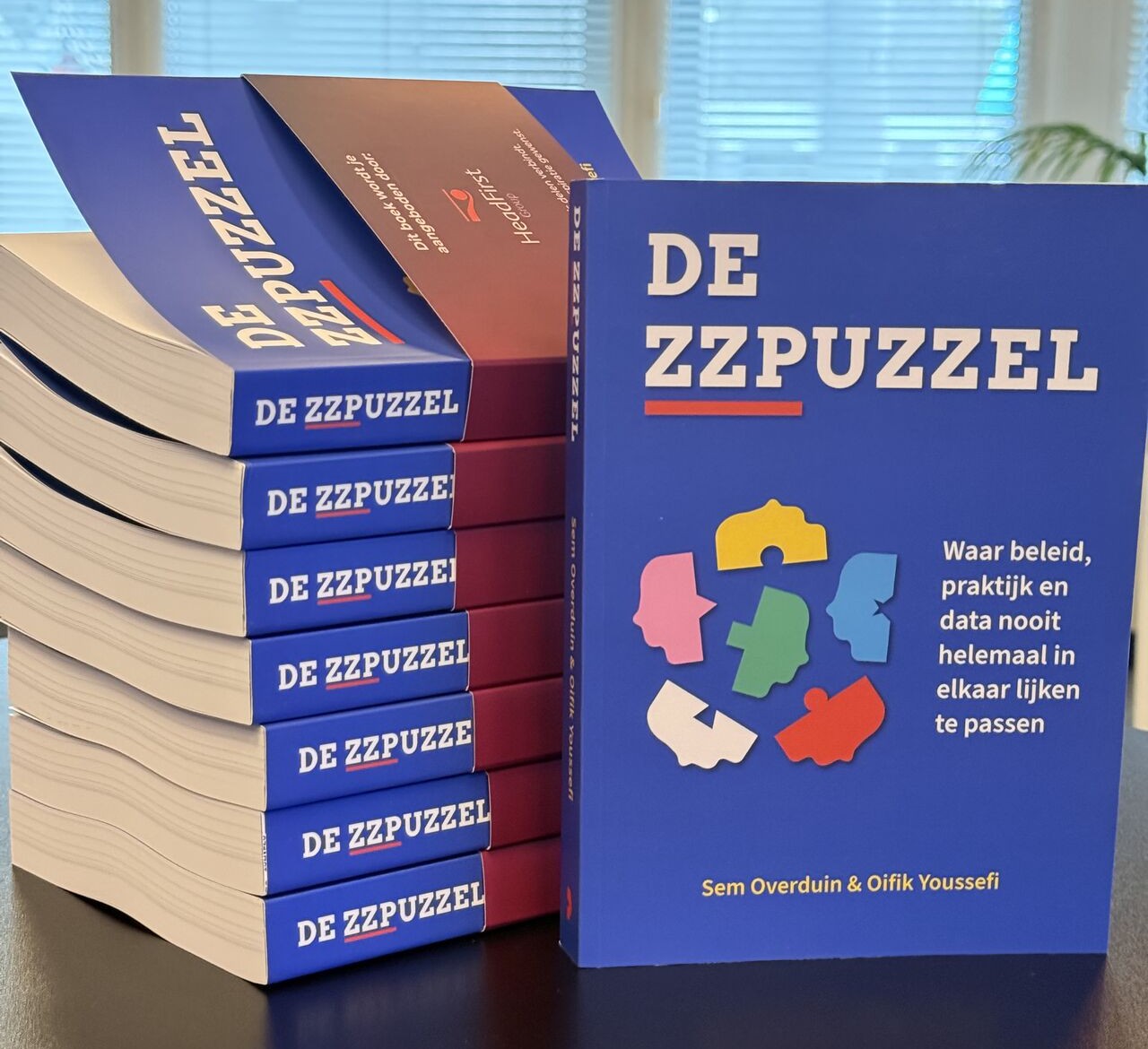
The new book De ZZPuzzel (The Self-Employed Puzzle) is being published at a time when the discussion about the position and role of self-employed professionals in the labor market is once again in the spotlight. Clear political choices have been made in the recently published coalition agreement, and since the end of the enforcement moratorium on January 1, 2025, there is still uncertainty among self-employed people and clients. Research cited in the book shows that a significant proportion of self-employed people are noticing a decline in assignments and that organizations have become more cautious about hiring self-employed professionals.
A labor market that has outgrown the system
What De ZZPuzzel also reveals is that the real problem lies deeper than legislation or enforcement. Dutch labor law and the social security system were designed at a time when work was almost exclusively carried out in salaried employment. The rise of hybrid careers, project-based work, and self-employment is increasingly difficult to fit into legal categories. This creates tension between different interests, such as individual freedom of choice, collective protection, solidarity, and the sustainability of the social security system. According to the authors, this explains the importance of taking an integrated view of the self-employed issue. As long as the system itself is not revised, any measure will be merely a band-aid solution. A much more fundamental reform is therefore necessary.
The self-employed do exist
Although it is often claimed that "the self-employed person does not exist," the book convincingly demonstrates that the self-employed person is indeed a recognizable worker. Although the group is very diverse, the initial motives are generally clear, the number of forced self-employed persons is small, and the majority of self-employed persons are very satisfied with their working conditions.
The authors demonstrate how simplifying this group not only obscures the debate, but also has consequences for the development of policy and legislation. As a result, the political discussion remains stuck in extremes, while the reality is much more nuanced.
How did it work again?
The ZZPuzzle does not advocate a ready-made solution, but it does lay out the pieces of the puzzle in order to gain a better understanding of the self-employed issue. According to the authors, the debate can only move forward when there is broader recognition of the key question: how do we organize freedom of choice, social protection, and collectivity in a labor market in which contract forms are becoming blurred, workers' preferences are changing, and workers are increasingly difficult to pigeonhole? According to the authors, it is very important that this fundamental debate takes place in The Hague.
A future-proof labor market requires political choices that extend beyond a single term of office and go beyond the reflex to keep building new rules on a foundation that has become unstable.
The book demonstrates that progress is only possible when all parties involved—politicians, government, social partners, market players, and the self-employed—share the same facts, the same history, and the same social context. Only then can there be room for policies that are feasible, fair, and future-proof.