
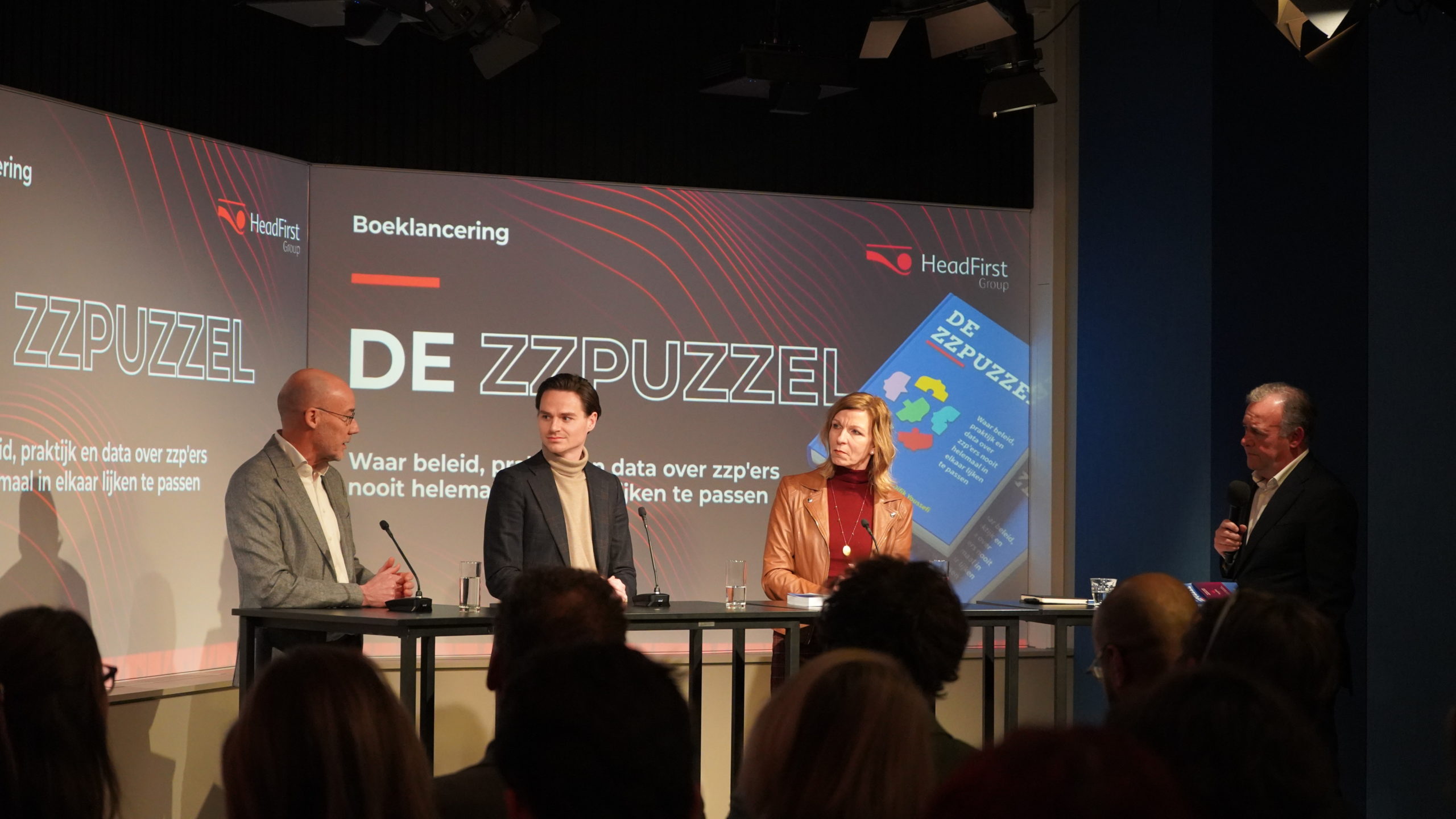
In the discussion about the use of freelancers, one question dominant: can this assignment be carried out by a self-employed person or not? During the book launch of De ZZPuzzel , a panel consisting of Connie Maathuis, Niels van der Neut, and Hugo Jan Ruts whether more certainty can be provided in advance to clients and self-employed professionals. The panel showed that complete certainty sounds appealing, but that this is not possible in practice.
European regulations
University lecturer in labor law Niels van der Neut at the University of Amsterdam explained that national legislation should also take European legislation. "You can say at the national level that someone is a freelancer, but under European law can that same person still qualify as an employee." Ultimately, every situation must be assessed on the basis of "all circumstances of the case" .. Exactly as prescribed by European labor regulations and as the Supreme Court has repeatedly has . It remains a matter of holistic assessment.
Belgium as an example? Only with nuance
Although Belgium has a system in which independence for certain professional groups is assessed using sectoral criteria, in practice this is limited and rarely used. Van der Neut and Ruts warned against idealizing this system. In Belgium, only a few cases per year are submitted to the Administrative Commission for the Settlement of Labor Relations, a review committee that, in cases of doubt, examines the labor relations. In addition, Belgian self-employed persons are compulsorily insured against, for example, incapacity for work and therefore contribute to a social security system, which reduces the pressure on the qualification question.
Phased introduction increases uncertainty
Connie Maathuis, chair of VZN, warned further that the phased introduction of the Self-Employed Persons Act can can cause uncertainty. "Don't go for a phased implementation. The market urgently needs more clarity," she said.
Complete certainty at the outset is impossible. The employment relationship test is holistic in nature, takes all circumstances of the case and will take place retrospectively. In a rapidly changing labor market, there must therefore also room for customization and there always take into account European regulations.
Request a free consultation
Questions about this? Please contact us.

Sem Overduin
Public Policy & Affairs Manager
Sem.Overduin@headfirst.nl
Oifik Youssefi
Public Affairs Officer
Oifik.Youssefi@headfirst.nl
Maaike van Driel
Head of Legal
Maaike.vanDriel@headfirst.group
Thomas ten Veldhuijs
Senior Legal Counsel
Thomas.tenVeldhuijs@headfirst.nl