
HeadFirst Group strongest grower in Flex Market Turnover Ranking 2023
HeadFirst Group has again taken the second spot in the prestigious Flexmarkt Turnover Ranking Top-100 in 2023. In fact, with revenue growth in the Netherlands for the year 2022 of €298.8 million, the HR-tech service provider is, in absolute numbers, the biggest grower in the list. "The fact that we achieved this largely organically by successfully serving existing and new clients makes me very proud," said CEO Marion van Happen.
For the year 2021, HeadFirst Group still recorded a Dutch turnover of 1,627.2 million euros. In 2022, that rose to 1,926 million, a growth of over 18%.
Van Happen: "We are accelerating our digital transformation. By deploying tech smartly, we create that colleagues have personal contact at the times when it really adds value for our customers (clients, suppliers and professionals alike). In this way we are working towards the ultimate customer journeys with high customer satisfaction. This has already visibly borne fruit in 2022. In 2023 and the years after, we will continue full steam ahead with this strategy."
All annual figures
Earlier this year, HeadFirst Group presented its annual results, including foreign divisions, presenting record revenues of 2.2 billion. HeadFirst Group's annual report can be read and downloaded on the Investor relations page.
About Flexmarkt Turnover Ranking Top-100
The Flexmarkt Turnover Ranking Top-100 is a leading ranking of flex companies, from small to large, offering a variety of services in staffing and hiring. In addition to staffing agencies, it includes numerous payroll companies, as well as secondment companies, zzp intermediaries and MSP service providers. The list is published annually by Flexmarkt in cooperation with Corporate Finance International (CFI). In terms of turnover, it covers more than half of the total Dutch flex industry and thus provides a clear, representative picture of developments in the market.


Opinion piece: The zzp spirit is out of the bottle - let workers choose their own form of contract
Recently, labor market data specialist Intelligence Group released figures showing that the majority of self-employed people would like to stay in business. Never before have so few self-employed people wanted to return to paid employment, just ten percent. In 2015, the figure was 18 percent. The same declining trend can be seen in all education levels. Of forced self-employment, I dare say on the basis of this information, there is hardly any more.
Studies by Statistics Netherlands and data from the Self-Employed Labor Survey also show the same picture over and over again: self-employed workers - compared to employed or temporary workers - are more often satisfied with their working conditions, sense of autonomy and learning opportunities at work. Self-employed workers experience less stress, are generally more proud of the work they do, and place great value on their sense of flexibility and freedom. Positive numbers and a development that I think we should cherish.
Not for nothing has the number of self-employed people been rising rapidly for years. In the Netherlands there are already over 1.2 million of them. Worldwide, with 1.57 billion, it is now the fastest growing group of workers in the labor market.
Why, according to the minister, is the permanent contract the norm?
Despite these clear figures, Minister Van Gennip (SZW) came out with a firm letter on December 16, 2022. A letter full of plans and proposals that tighten the thumbscrews, make being self-employed more unattractive and where working as an employee is clearly taken as the starting point. In these plans, both labor law and tax law tighten the belt for the self-employed.
The permanent contract is the norm and the minister wants to see a reduction in the number of self-employed workers in the Dutch labor market. This seems at odds with the choices made by working people in the Netherlands. Want to limit the group of working people who, on average, are the happiest? Especially since it is very questionable whether they will actually return to salaried employment if the rules become stricter and the frameworks more limited.
Everyone is desperately needed
All the plans and proposals highlighted in last December's letter and the broader labor market letter of April 3 clearly aim to reduce flexible work. Van Gennip also makes this clear in speeches and television appearances. The plans are based on the opinions of the Borstlap Commission and the SER MLT opinion, but we are far too quick to overlook the fact that these reports came about in a truly completely different time. Reality has caught up with us: after all, we are currently facing an extremely tight labor market. Employers and clients are crying out for staff, vacancies are being filled less quickly, and many organizations currently see this as the greatest challenge and threat to the continuity of their services. Shouldn't the focus of policy and political debate be on getting more workers on the job market instead of reducing flexible work? Shouldn't we give more space and flexibility to workers? And embrace all workers, whether they are self-employed, employees or temporary workers?
Criterion of 'embedding' becomes a battleground
When I then zoom in on the content of the self-employment plans, I am nonetheless moderately enthusiastic. In the corridors I hear that policymakers and organizations involved are struggling to flesh out the three elements of authority, embedding and self-employment. Will the criterion of "embeddedness in the organization" provide the desired clarity? We are already struggling incredibly to clarify the term "authority. Will the embedding criterion then provide clarity, or will it just create even more ambiguity? While clients, intermediaries and freelancers have been calling for clear frameworks and rules for years.
As CEO of one of the largest HR-tech service providers in the country, I see hiring requests coming in daily from numerous organizations. Think of ministries, municipalities, companies and universities. And time after time I ask myself; is this function or assignment embedded in the organization? By the current definition of embedding, the answer is often 'yes': these are professionals who are flown in to work on a project or replace someone temporarily. More and more organizations are doing a lot of project-based work. Hired professionals - take software developers as an example - work shoulder-to-shoulder in teams with employees on the same projects. Over time - currently averaging 1 year - the professional moves out and the professional has made a valuable contribution to the client's goals with his or her knowledge and expertise. The hiring organization happy and the professional happy. And time and again I ask myself; will this still be possible in the future?
If not, this is going to have serious consequences for the stability of organizations. The very tight labor market and already sometimes faltering services are going to be in even bigger trouble. I predict you: this is going to be as much of a battleground as it was in 2016 when the DBA law was introduced.
Regardless of how you will define embedding, the resulting question is: what will be the interrelationship between the three elements of authority, embedding and self-employment? How much weight will the entrepreneurial criteria be given? Will these criteria actually be seen as contraindicating the existence of an employment contract? And do we then look at embeddedness of the work being performed? Or do we look at embeddedness of the worker?
The House of Representatives was therefore right to ask critical questions on February 9 in response to the zzp plans. On Wednesday, May 31, the House received no less than 56 pages of answers from the minister. In my opinion, the minister has not yet sufficiently answered those questions. The ball is now in the Parliamentarians' court to ask about this again during the Commission meeting on June 7.
What then?
I am positive that entrepreneurial criteria are clearly named in the mid-December letter. Therefore, start working on the further elaboration of clear and verifiable entrepreneurial criteria. And, more or less in line with the advice of the Boot Committee, bring forward the entrepreneurial criteria. Formulate firm criteria that an independent entrepreneur must meet. If the worker jumps through this hoop, he or she is obviously self-employed and then notions such as embedding and authority are no longer relevant. This also improves enforceability because the number of situations to be checked is thus much reduced.
What I have been advocating for some time is that we take a more sectoral approach to the zzp issue. The target group is simply far too heterogeneous and diverse for generic measures to combat the excesses. The majority of the self-employed, as mentioned, have consciously chosen self-employment and are satisfied with their working conditions and sense of autonomy. We should cherish that and not frustrate it with generic measures. Follow the example of the healthcare sector and, on the contrary, enter into discussions with trade associations and market parties in sectors that involve a lot of public money, such as education and childcare. Make clear agreements with each other about when it is or is not possible to work as a self-employed person. That approach is much more in line with the diversity of the target group and in this way you ensure customization at the sectoral level.
And third, get to work as soon as possible on a basic disability system for all working people. Separate it from the form of contract and get everyone to contribute to a collective system. That is solidary, keeps the system affordable and ensures that we protect all vulnerable workers from the consequences and risks of disability. This will require a major system change and the necessary thinking, but it is more than necessary that we start this as soon as possible.
The genie is out of the bottle
The zzp spirit is out of the bottle. I do not believe that top-down measures from The Hague are going to change this. The number of self-employed people will continue to increase. This movement is irreversible. That is why I ask politicians and policy makers in The Hague to embrace this development and, on the contrary, to regulate matters around it properly. Focus less on the form of contract, ensure that everyone contributes to a collective system and offer more space and freedom to workers, especially now, in times of extreme scarcity. On Wednesday, June 7, people will cross swords in the Chamber. I am curious to see if these fundamental questions will be raised and hope for a good substantive debate. See you then!
Note to editors
Do you have any questions or comments? Please contact Maud Raaphorst, Teamlead Communications at HeadFirst Group, reachable at 06 - 51 10 70 77 or maud.raaphorst@headfirst.nl

Employers not putting enough effort into retention
Salaried workers are now almost twice as likely to change employers (external mobility) as in 2015. While a similar number of people change positions with their existing employer (internal mobility) as in 2015. This is despite the fact that internal advancement has proven benefits such as higher employee satisfaction and productivity and lower recruitment and onboarding costs. This is according to the latest Talent Monitor from labor market data specialist Intelligence Group and HR - tech service provider HeadFirst Group.
In fact, external mobility is currently almost twice as high as internal mobility. In the first quarter of 2023, this ratio was almost 2:1, meaning: when three people change jobs, two out of three times it is with a different employer. This shows that employers are not sufficiently committed to internal careers and advancement opportunities and are mainly focusing
on recruiting new staff.
Retention is the new recruiting
Staff turnover rates are increasing rapidly, which can be seen in all age groups. Young people under 25 take the crown, where the average turnaround time is 2.7 years. 36.5% found a new employer last year. This average increases with age, peaking at 17 years among those over 60. Most of the current labor market mobility is explained by the group up to 35 years of age.
Geert-Jan Waasdorp, director and founder of Intelligence Group: "The principle of 'retention is the new recruitment' has hardly penetrated employers. They keep pushing for external recruitment, while internal mobility is not yet sufficiently on the agenda. Despite the benefits of internal mobility. 2023 should be the year of the turnaround in this area."
Low labor market activity requires different recruitment approach
If we look at the flexible labor market - more specifically independent professionals and secondees in highly skilled roles - assignments in 2022 lasted an average of one year (363 days). In 2020, this was 395 days. This shows a small decline, but not nearly as large as the decline in the length of tenure of permanent staff.
We can say that the duration of the average assignment of one year is getting closer and closer to the declining average of the length of time a young person is employed by an employer, which is now well under three years. Marion van Happen: "To what extent is permanent still fixed and flex still flex? Flexibility is growing among people with permanent jobs. Add to this the fact that recent figures from Intelligence Group show that only 10% of self-employed people are considering going back into paid employment, where in 2015 it was 18%. These are irreversible trends. I ask the policymakers and politicians in The Hague not to stop these developments with legislation, but rather to embrace it and to regulate the
things around it especially well."
The full Talent Monitor 'Fixed is getting more mobile and flex is getting more sustainable' can be read here.
About HeadFirst Group
HeadFirst Group is a leading, international HR technology service provider and the largest platform for professionals in the Netherlands. The organization offers a diversity of HR solutions, such as Managed Service Providing, Recruitment Process Outsourcing, intermediary services (matchmaking, contracting) and HR consulting. An average of twenty thousand professionals work daily for over four hundred clients in Europe, with which HeadFirst Group realizes an annual turnover of over 2 billion euros. The main brands of HeadFirst Group are the intermediaries HeadFirst and Between, MSP service provider Staffing Management Services and RPO and recruitment specialist Sterksen.
About Intelligence Group
Intelligence Group is an International Data & Tech company in the field of labor market and recruitment data. Intelligence Group focuses on the collection, storage and enrichment of labor market related data for the purpose of improving the recruitment of personnel (or employees) by employers and the employability/labor market opportunities of employees. This data is made available to clients in a wide variety, via reports, dashboards and APIs.
Note to editors
Do you have any questions or comments in response to this press release? Please contact Maud Raaphorst, spokesperson at HeadFirst Group, reachable at 06 - 51 10 70 77 or marketing@headfirst.nl

Talent Monitor: Fixed is getting more mobile and flex is getting more sustainable
Fixed is becoming more mobile and flex more sustainable
In this Talent Monitor, we took a closer look at the duration of jobs and assignments of workers. In doing so, we explicitly looked for the overlap and correlation between permanent and flex in the inflow and labor market activity and zoom in on retention and retention.
Staff retention is the new recruiting
Labor market activity - which involves actively looking for a job/assignment yourself - is historically low for both permanent and flex workers. In contrast, external mobility is at a record high, which for salaried workers means they are almost twice as likely to change employers as in 2015. This is almost twice the rate of internal mobility. Employers are hardly betting on internal careers and advancement opportunities, instead focusing primarily on recruitment in the external labor market. This is a major driver of costs and the loss of productivity and job happiness.
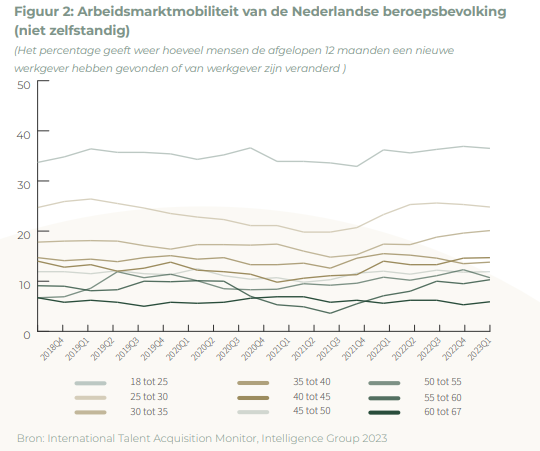
Key findings
- Labor market activity (actively looking for a job/assignment yourself) is historically low for both permanent and flex, prompted by the tightness in the labor market. This puts more emphasis on sourcing and active mediation by intermediaries and secondments.
- In contrast, external mobility is at a record high, which for salaried workers means that they are changing employers almost twice as fast as in 2015. In early 2023, the duration of a salaried job for the entire Dutch labor force will be less than five years, down from eight years in 2015.
- It is almost twice as large as internal mobility. Which means, concretely, that employers are hardly betting on internal careers and advancement opportunities, but are concentrating mainly on recruitment in the external labor market. This is a major driver of costs and the loss of productivity and job happiness.
- Whereas employees are employed for shorter and shorter periods, the initial assignment duration of contractors - independent professionals and secondees - is steadily increasing to an average of 205 days. In the process, the percentage of assignments that are renewed after the initial assignment is also increasing again, to 61% in 2022.
- Not paying or charging a market-based labor market rate according to professional group and level of experience lowers the likelihood of renewing an assignment, both from the client and contractor's perspective. It also increases the need for greater transparency and increases the call for independent data-driven rate information.
- The probability of being renewed and the duration of the contract - in addition to the rate - also depends on type of position (embedding), type of project (head-to-head), initial duration (the longer, the lower the probability of being renewed) and the industry (tendered/not tendered).
Partner

Download Talent Monitor
By downloading the Talent Monitor, you agree that your data will be shared with co-initiator Intelligence Group.
Other reports...
Nothing found.
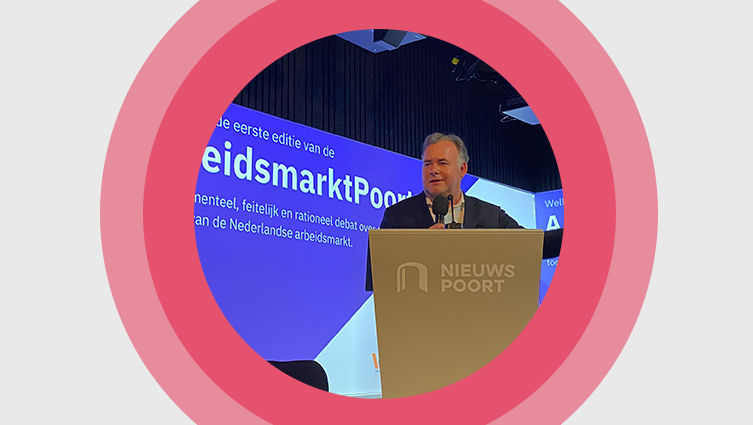
Successful first edition of the Labor Market Gateway
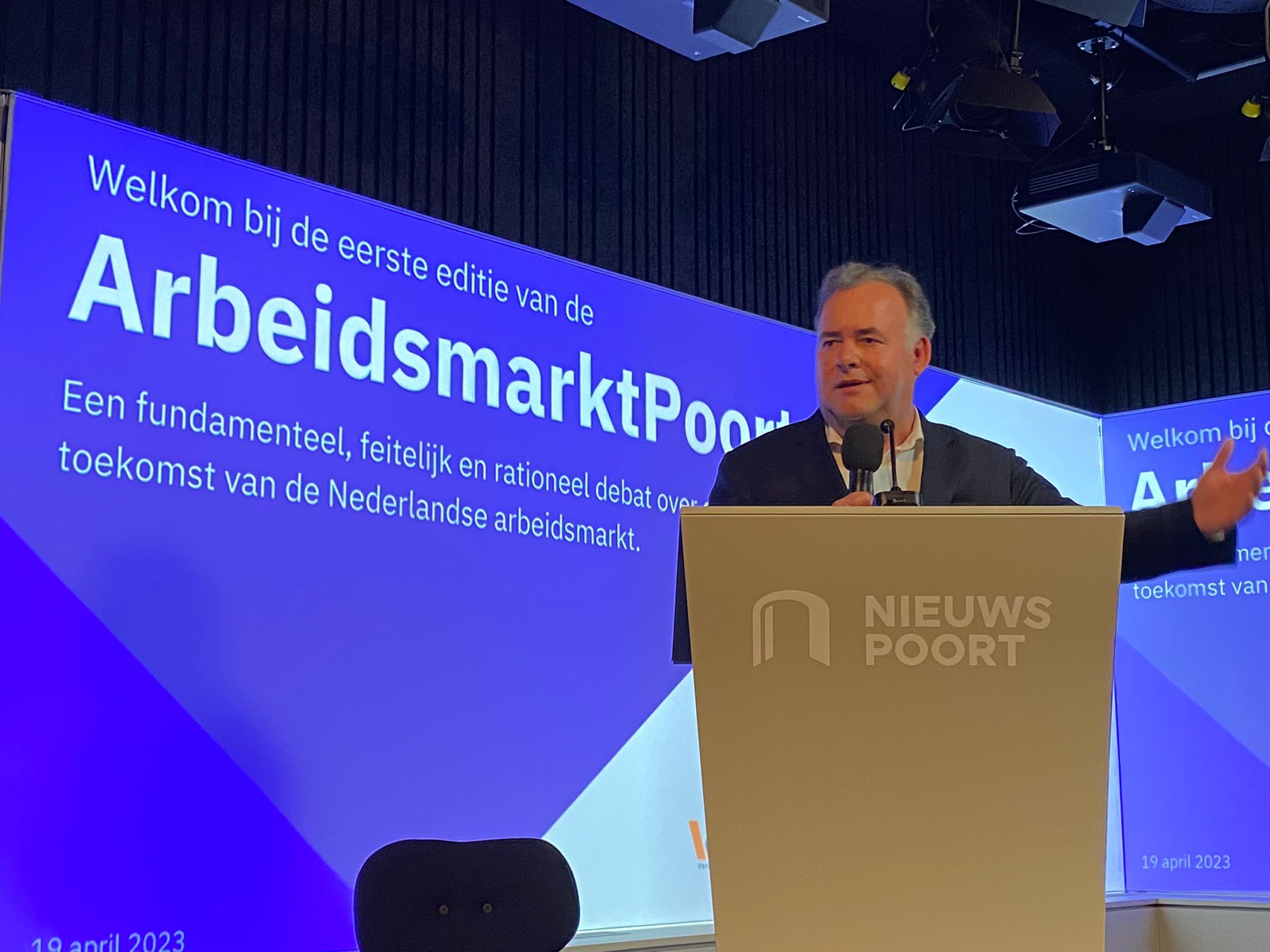
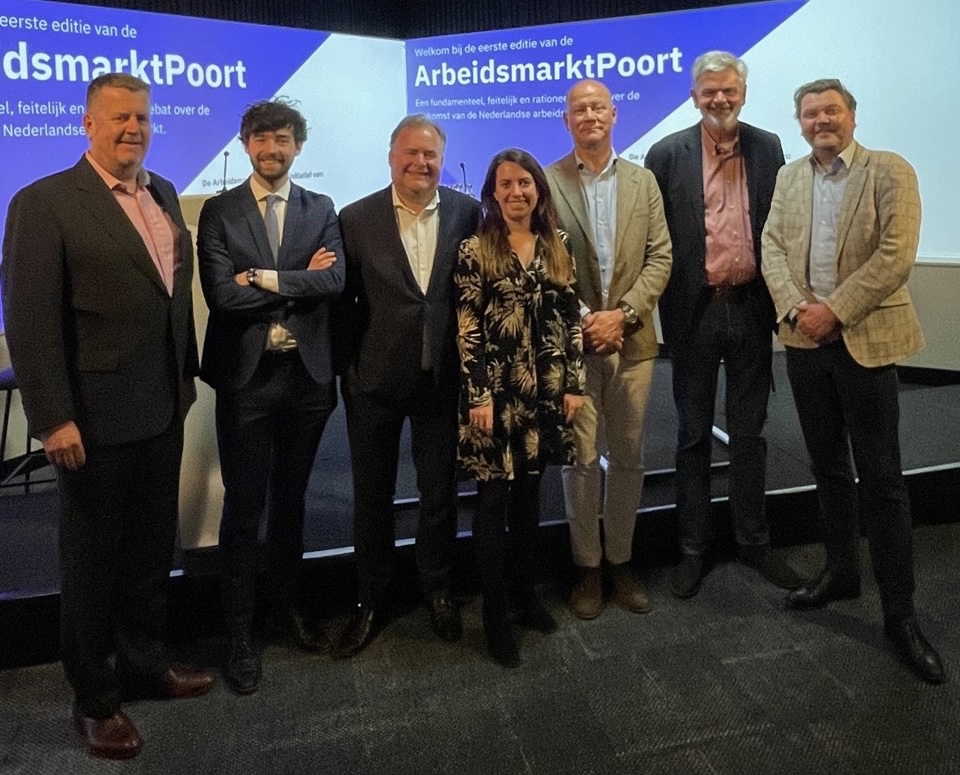
On Wednesday, April 19, the first edition of the ArbeidsmarktPoort was scheduled in Nieuwspoort. The ArbeidsmarktPoort is an initiative of the Bovib (branch association for intermediaries and brokers), the VvDN (branch association for secondment companies) and ONL voor Ondernemers. The ArbeidsmarktPoort is a discussion and meeting platform where politicians, journalists, civil servants, industry associations, market parties and other stakeholders exchange views. As a member of the Bovib and cooperation partner of ONL for Entrepreneurs, HeadFirst Group has contributed to the creation of this Labor Market Gate. We welcome discussion and debate on issues and themes related to the labor market and find it important that the public-social debate is taken to a higher level.
The first Labor Market Gate was dominated by the Borstlap Commission report and the parliamentary letter from Minister Van Gennip (Social Affairs and Employment) on Monday, April 3. In this letter, the minister comes up with firm plans to reduce flexible labor. The Borstlap Commission report in January 2020 came with a number of recommendations and proposals to thoroughly reform the labor market to make it future-proof.
Hans Borstlap, former top official and former chairman of the committee, opened the first edition of Labor Market Gate. Borstlap shed light on Minister Van Gennip's plans, the lightning-fast developments in the labor market and his committee's previous recommendations. Borstlap is positive about the direction Van Gennip wants to take, but also strongly criticized the introduction of compulsory disability insurance and the Crisis Regulation Personnel Retention. In addition, he lacks ambitious and clear plans regarding the development of an individual learning account.
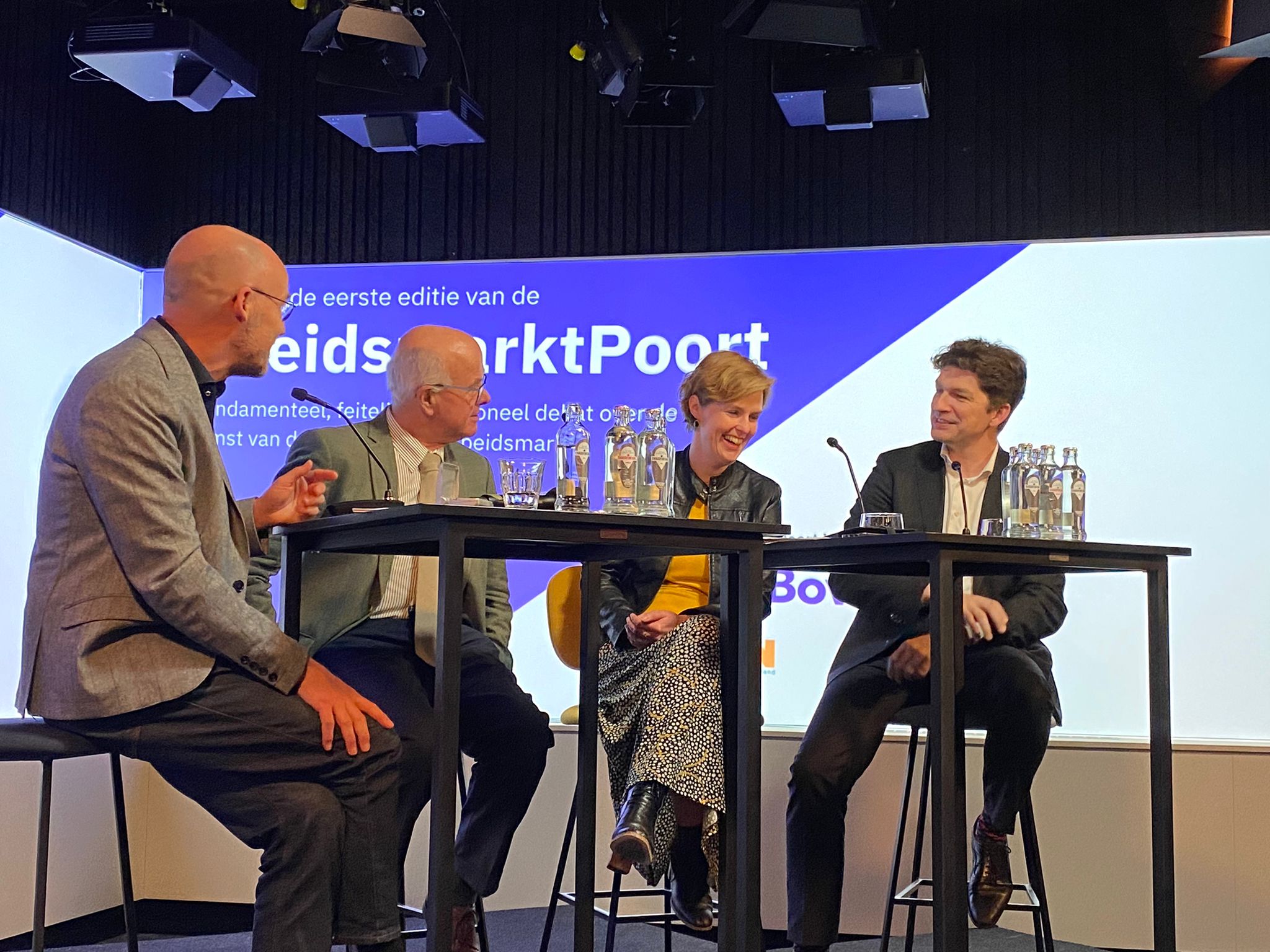
Hans Borstlap's speech was followed by a panel with Hilde Palland (Member of Parliament for the CDA), Ruben Houweling (Professor of Labor Law at Erasmus University and Crown Member of the SER) and Hans himself. The panel was led by Hugo-Jan Ruts, editor-in-chief of ZiPconomy. An interesting and substantive panel followed where various topics were discussed, such as the current tightness in the labor market, the growth of the number of self-employed people and a basic social system for all employed people, regardless of the form of contract. Interesting topics on which the last word has not yet been spoken.
HeadFirst Group supports the initiative of this ArbeidsmarktPoort and strongly supports a constructive, fundamental and factual debate on issues and challenges regarding the Dutch labor market. In the future, we will therefore certainly contribute to meetings and debate sessions. On Tuesday, October 24, the second edition of the Labor Market Gate is scheduled. Kim Putters, chairman of the Social and Economic Council and former director of the Social and Cultural Planning Office, will be present then and provide the opening. More information will follow.
If you have questions about the Labor Market Gate and our position in the labor market file, please contact Sem Overduin, Public Affairs Officer at HeadFirst Group. He can be reached at Sem.Overduin@headfirst.nl
HeadFirst Group organizes knowledge session for SGP parliamentary party
HeadFirst Group organizes knowledge session for SGP parliamentary party
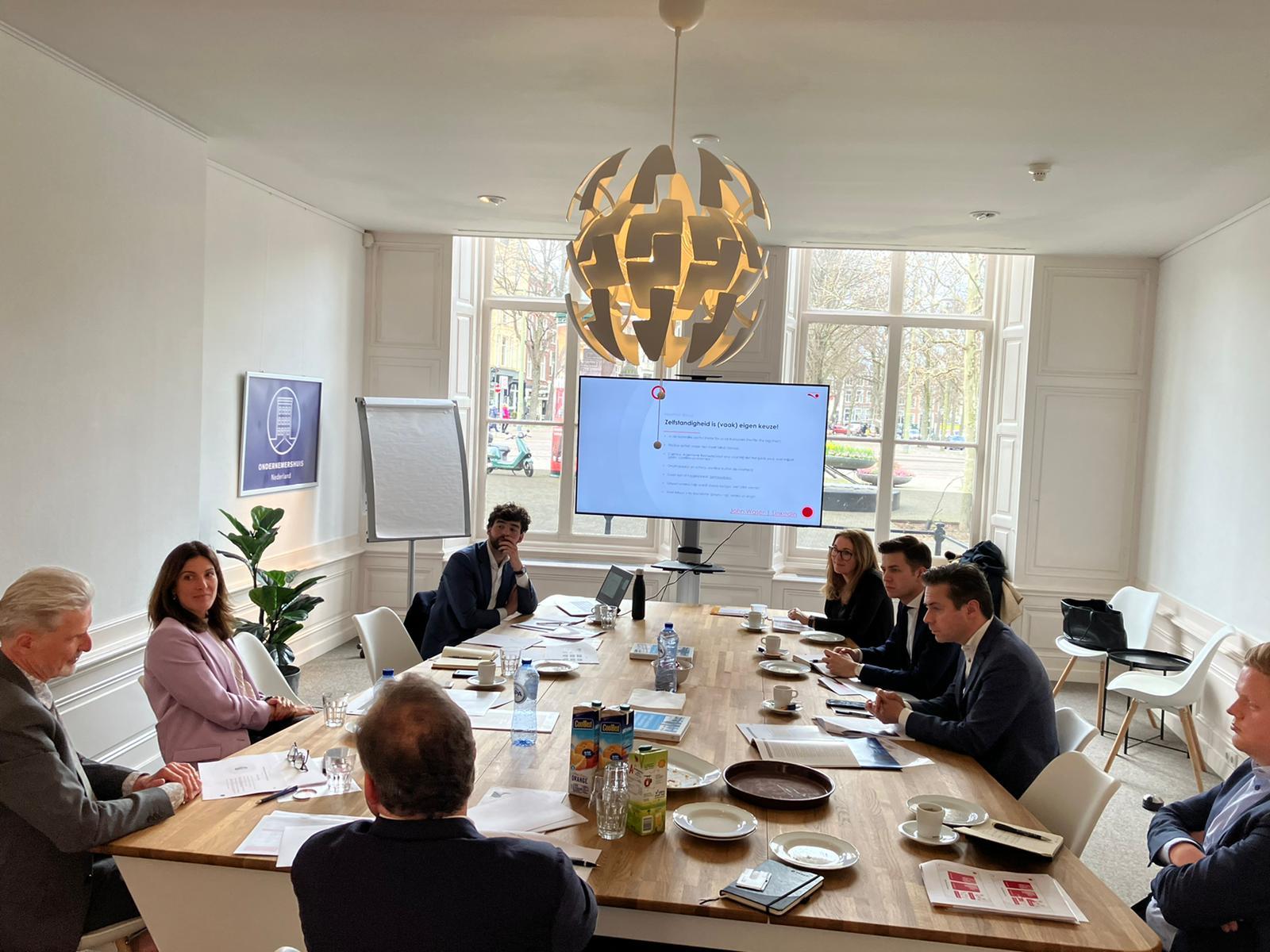
On Thursday, March 16, HeadFirst Group, in cooperation with our partner ONL voor Ondernemers, organized a knowledge session for the SGP parliamentary party. On behalf of the SGP, Chris Stoffer (MP) and Arnold van Huizen (policy officer) were present. In the past, HeadFirst Group has organized more knowledge sessions for MPs and policy officers. During the knowledge sessions we reflect on the services of HeadFirst Group and what role and added value an HR service provider has in the (flexible) labor market. In addition, we take the MPs and policy officers into relevant developments in the labor market regarding the zzp-dossier and which challenges and bottlenecks we experience in legislation and regulations. Besides a HeadFirst Group delegation, an independent professional and a representative of one of our clients were also present. They gave a short presentation on why they use our services as client and contractor and where the added value of HeadFirst Group lies for them.
All in all, it was a very successful session and we were able to provide the SGP Parliamentary Group with the necessary information and knowledge. We would like to thank our cooperation partner ONL voor Ondernemers for their hospitality and the attendees for their sharp questions and the discussion we had. Through this type of knowledge session, we try to put ourselves in the limelight as a professional discussion partner and make a valuable contribution to the labor market and self-employed workers file.
If you have any questions about our knowledge sessions as a result of this post, please contact Sem Overduin, Public Affairs Officer at HeadFirst Group. Sem can be reached at Sem.Overduin@headfirst.nl

Florine Onderwijzer joins board of trade association Bovib
Florine Onderwijzer, managing director Professionals & Partners services at HeadFirst Group, has joined the board of trade association Bovib. At the General Members' Meeting on Tuesday, March 28, Florine was officially appointed, along with three other board members. From now on, Bovib chairman Marc Nijhuis will form the leadership of the association with Florine, Sarah Goossens (of Harvey Nash Netherlands), Saskia Kapper (Hero Interim Professionals) and Giancarlo Balzarelli (Magnit Benelux).
"I am very happy with our new board, in which different disciplines and various types of members of the Bovib are represented," says Marc Nijhuis. "Together we will set to work on the trajectory of far-reaching professionalization of the Bovib."
Florine enthusiastically starts in her new role: "The Bovib is there for intermediaries and MSPs, but also represents the interests of hiring principals, independent professionals (zp'ers) and suppliers of professionals (secondmenters). The goal is a mature hiring market, with clear legislation, in which supply and demand are perfectly connected. To that goal I will contribute with great energy." Florine continues: "From my role at HeadFirst Group, with full focus on our services to zp'ers and suppliers, I want to contribute to a Bovib policy that properly represents the supply side of the flexible labor market. This matches perfectly with the disciplines of the other (new) board members of the industry association."
About Bovib
The Bovib is the largest trade association for independent and quality intermediaries, brokers and MSPs. They bring client and contractor together, but also contribute indispensable knowledge of laws and regulations. A task that requires quality, transparency and integrity. The companies that subscribe to this feel at home with the Bovib. With more than sixty members, an active board and short lines to The Hague, they are a serious discussion partner. The Bovib stands for service based on clear and verifiable criteria. They give substance to this with, among other things, a hallmark for the intermediary role, which now enjoys national recognition.

HeadFirst Group expands collaboration with insurtech Alicia for self-employed workers in Belgium
HeadFirst Group brings its partnership with insurtech Alicia, specializing in embedded insurance for self-employed workers, to Belgium. The HR-tech service provider thus takes another important step in its further reaching strategy towards an international platform organization. Florine Onderwijzer, Managing Director Professionals & Partners services at HeadFirst Group: "Thanks to our solution, self-employed people in Belgium can now also start an assignment quickly and properly insured. "
Unburdening zzp'ers
The partnership builds on the ambition to offer support to professionals. Not only in finding challenging assignments, but also in optimizing their own business operations and making them as simple as possible. According to Marijn Moerman, CEO and co-founder of Alicia, this also includes taking care of the right insurances: "In addition to the flexibilization trend in the Netherlands, the number of freelancers in Belgium also continues to rise: last year by 7 percent to almost 200,000. At the same time, insurance coverage is declining. Zzp'ers are insufficiently familiar with the risks and finding appropriate insurance is a considerable search."
That, according to Onderwijzer, is exactly where Alicia makes a difference. "Together we have developed a scalable process for offering high-quality insurance products. Thanks to full digitization, there is more time for personal contact when it matters and we are also able to offer more comprehensive support to self-employed people outside our own borders. This next step in our cooperation thus fits perfectly with our international ambitions for our services for professionals."
On-demand and embedded solutions
In early 2022, HeadFirst Group and its platform Select joined forces with Alicia. It offers embedded solutions for relevant insurance and services that are made available in an integrated way through connected platforms using APIs.
All zzp'ers who are provided with assignments through HeadFirst Group can insure themselves for numerous topics at once, as part of the total package of services that HeadFirst Group has offered for years. "Our goal is to put together the most ideal package of services that professionals primarily need to be entrepreneurs and be able to focus fully on their core business. Through the collective purchasing advantage, self-employed people get attractive and flexible products at a lower price than if everything is purchased separately from different service providers."


Frequently asked questions outline 'Progress letter on working with and as self-employed(s)'
Are you already familiar with the three tracks that the government has devised to restore balance to the current labor market? What plans and proposals are there for the future of working as and with freelancers? Public Affairs Officer Sem Overduin and Business Development Director Paul Oldenburg gave all the ins & outs on this during a webinar. From the many questions asked during the session, it became clear how much the subject is of interest to self-employed people and clients. We share the most common ones below.
- How will the self-employment deduction continue to be phased out?
In the Coalition Agreement 2021-2025 it was agreed to accelerate the reduction of the self-employed deduction. This scheme will be reduced to €1,200 in 2026 and further reduced to €900 in 2027. The self-employed deduction for starters, the starter's deduction, will remain unchanged. However, self-employed people will be compensated during this cabinet period with an increase in the labor discount. With this measure, the cabinet wants to reduce the differences in tax treatment between employees and the self-employed. More information about the self-employed deduction and the steps that will be taken in the coming years can be found here.
- Why is the Fiscal Old Age Reserve (FOR) being abolished?
Since Jan. 1, 2023, you can no longer build up a retirement reserve. The government abolished it to prevent entrepreneurs from using the fiscal old-age reserve to obtain tax deferral. The old-age reserve built up until December 31, 2022, can still be settled according to the current rules. This means that it can remain on the company's balance sheet and can be used in the future to negotiate a qualifying annuity, or it must be settled no later than when the company ceases operations. Also with these measures, the government wants to ensure more equal taxation between employees, self-employed persons and shareholders.
- How is the element of "self-employment" further implemented?
Current case law looks at contraindications to the existence of an employment contract. Some of these are included in the Payroll Tax Handbook. Some examples are (1) the performance of work on the basis of a result obligation, (2) specific knowledge and expertise of the worker that employees within the organization do not have, and (3) that the worker receives substantially higher remuneration than employees doing similar work in salaried employment. In the coming period, it will be worked out with social partners, experts and stakeholders which facts and circumstances indicate self-employment and how these contraindications can be given weight in assessing the employment relationship.
- What is the current status of the enforcement moratorium?
In the period January through October 2022, 275 company visits and 200 book audits were conducted on the qualification of the employment relationship. Partly because of the limited quantitative capacity and the complexity of assessing the employment relationship, it is complicated for the Tax and Customs Administration to take effective action on false self-employment. On the other hand, additional staff have been trained and the Tax and Customs Administration currently has 80 FTE for enforcement.
- What plans does the Cabinet have for the enforcement moratorium?
In the Cabinet' s response to the reports issued by the Netherlands Court of Audit and the National Audit Authority, the Cabinet expressed its ambition to improve this enforcement in the short term and to lift the enforcement moratorium entirely by January 1, 2025 at the latest. In the run-up to January 1, 2025, the Tax and Customs Administration will devote extra attention to communication about enforcement. This will include the consequences for principals and contractors of the intended abolition and the (financial) risks they run.
- What if an audit reveals (fictitious) employment but no malice?
Then the Internal Revenue Service will issue directions that you can work on. Client and contractor are usually given three months to follow the directions. If this is not sufficiently followed, the Tax Office will impose correction obligations and additional tax assessments.
HeadFirst Group's HR tech company ProUnity wins comprehensive framework agreement with Smals for external hiring in Belgium
The ICT services organization of Belgian public institutions Smals awards the framework agreement for finding and managing external ICT professionals to ProUnity, the Belgian HR technology company that is part of HeadFirst Group. The framework agreement is effective January 1, 2023 and has a term of four years. Simone Groeneveld, Director MSP services at HeadFirst Group: "This offers great opportunities for freelancers and secondment companies in the Benelux to offer their knowledge to dozens of Belgian government organizations."
"Belgian governments are investing heavily in technology and innovation, with a view to providing better services to citizens and businesses. To support this, Smals will be looking for some 400 new employees this year. At the same time, we are supplementing our projects and services with temporary ICT expertise. With ProUnity we give a large group of professionals a gateway to work on challenging assignments, in all kinds of domains, with equal opportunities for everyone," explains Donald De Keyser, Management Controller at Smals.
Great opportunities for professionals
Already about 50 government organizations publish daily assignments on the ProUnity platform. Current users include the Federal Parliament, the federal government departments of Finance, Justice, Interior and Development Cooperation, the Walloon government, as well as Sciensano, RIZIV, RVA, Forem, Actiris, the Federal Police and the Center for Cyber Security.
ProUnity makes access to these assignments quick and easy for a range of professionals, self-employed and employed by secondment companies, in the Benelux. Smart use of the combination of its comprehensive marketplace and VMS platform allows them to deploy their talent to Smals and its members. The ProUnity platform monitors the entire collaboration, from the publication of new assignments and the management of contracts and time registration to reporting and invoicing, in strict compliance with Belgian tax and social legislation.
"ProUnity is an innovative tech company, with a sense of personal touch. This perfect balance between tech and touch is essential in our service and industry," explains Simone Groeneveld. "When we welcomed ProUnity into our group in July 2022, we knew they were capable of this kind of commercial success. A big compliment to the ProUnity team. This is an important step in our further reaching strategy towards an international platform organization."